




Choosing a career in chemical engineering is a big decision, but one question often creates confusion and stress: Is the salary in Nepal truly worth the effort, years of study, and technical skills required? Many students and early professionals worry about low starting pay, limited industries, and unclear growth opportunities, especially when comparing chemical engineering with other engineering fields.
This uncertainty makes it hard to plan your future, whether you are a student selecting a degree or a professional considering career growth in Nepal or abroad.
In this guide, you will get a clear breakdown of the chemical engineer salary in Nepal, including earnings by experience, industry, and future potential. By the end, you will know what to expect, how to increase your income, and whether this career aligns with your goals.
In this blog
What does a Chemical Engineer do?
A chemical engineer applies principles of chemistry, physics, mathematics, and biology to design, operate, and improve processes that convert raw materials into useful products. In Nepal, chemical engineers play a crucial role across industries such as manufacturing, pharmaceuticals, food processing, cement, hydropower, and environmental management.
Their work focuses on making production processes efficient, safe, cost-effective, and environmentally responsible. Unlike pure chemistry roles, chemical engineering is strongly industry-driven and problem-oriented.
Key Responsibilities of a Chemical Engineer
Chemical engineers are involved in both technical and managerial tasks, including:
- Designing and optimizing chemical and industrial processes
- Operating and monitoring production systems in factories and plants
- Ensuring product quality, safety standards, and regulatory compliance
- Managing raw materials, energy usage, and waste treatment
- Troubleshooting process failures and improving efficiency
- Collaborating with mechanical, electrical, and civil engineers
- Supervising production teams and coordinating with management
Role of Chemical Engineers in Nepal
In Nepal, chemical engineers often work in production plants, laboratories, and project sites. Their responsibilities may vary depending on the industry and company size. Some focus on quality control and laboratory testing, while others handle plant operations, safety management, or research and development.
With growing industrialization and stricter environmental regulations, chemical engineers are increasingly valued for their ability to reduce costs, improve sustainability, and enhance production output. This versatility makes chemical engineering a stable and respected career choice in Nepal with opportunities for long-term growth.
What is the Average Chemical Engineer Salary in Nepal?
The average salary of a chemical engineer in Nepal ranges between NPR 35,000 and NPR 80,000 per month, depending on experience, industry, and employer. In Nepal, chemical engineering is a specialized field, and salary levels reflect both technical expertise and industry demand. Entry-level chemical engineers typically earn closer to the lower end of the spectrum, especially in small to mid size manufacturing or process-oriented companies. With a few years of experience, salaries generally rise significantly due to greater responsibility, technical leadership, and operational efficiency.
Factors such as the size of the organization, location, and sector (for example, pharmaceuticals versus food processing) also influence pay scales. Multinational companies and energy sector employers often offer higher compensation compared to traditional manufacturing roles.
It is important to view these figures as a guideline rather than fixed standards. Many engineers also receive additional benefits such as allowances, performance bonuses, health coverage, or project-based incentives that can meaningfully increase total earnings. Compared with national average incomes, chemical engineering remains one of the well-paid jobs in Nepal, especially for those who continue developing specialized skills or move into supervisory and managerial roles as their careers advance.
Chemical Engineer Salary in Nepal by Experience Level
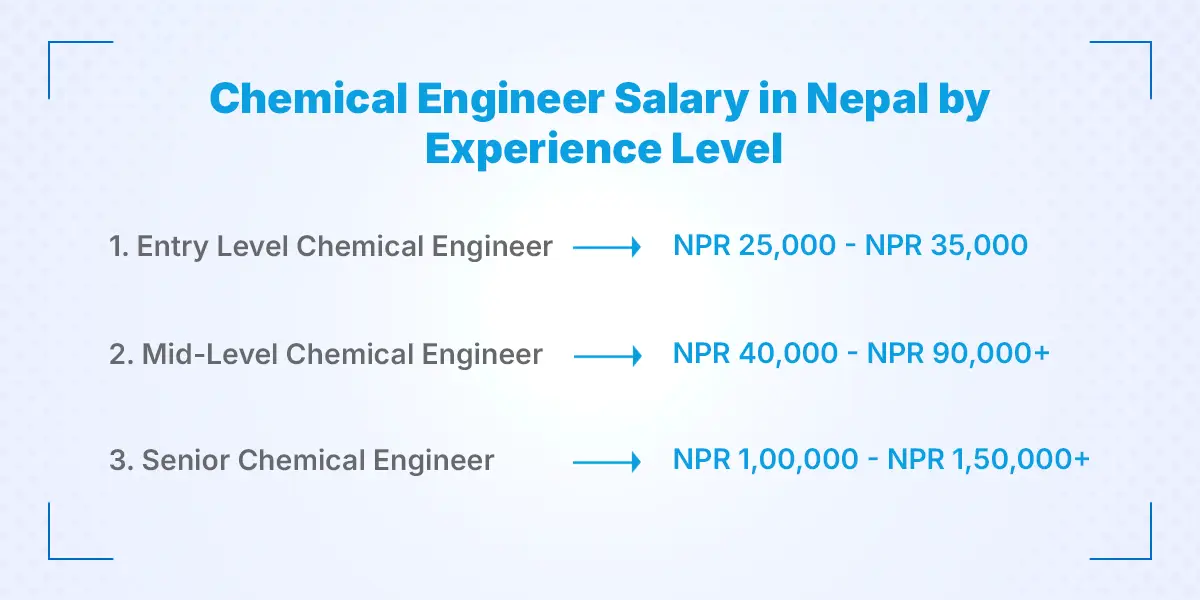
Chemical engineer salaries in Nepal can vary a lot depending on experience. Fresh graduates start with lower pay, but as you gain experience, your salary can grow significantly. Different industries and company sizes also affect earnings. Let’s look at how salaries change from entry level to senior level in simple terms.
1. Entry Level Chemical Engineer
Fresh chemical engineers in Nepal usually earn between NPR 25,000 and NPR 35,000 per month. Most start with small factories, labs, or manufacturing jobs. At this stage, the focus is on learning, gaining practical experience, and understanding real work processes. Some entry-level engineers may also join internships or training programs before a full-time role. Salaries are often higher in bigger cities like Kathmandu. Even though the pay is modest, it helps you build your skills and get a foothold in the industry. Occasionally, small bonuses or allowances are added to the monthly pay.
2. Mid-Level Chemical Engineer
Chemical engineers with 3 to 5 years of experience typically earn between NPR 40,000 and NPR 90,000 per month. By now, they understand processes well and can take on more responsibilities. Mid-level engineers often supervise small teams or handle project management tasks. Working in sectors like pharmaceuticals, energy, or large manufacturing companies usually pays more. At this stage, performance bonuses or extra benefits become more common. The salary growth is noticeable, making this a rewarding phase of your career.
3. Senior Level Chemical Engineer
Senior chemical engineers, with 7 or more years of experience, can earn between NPR 1,00,000 and NPR 1,50,000 or more per month. They lead projects, manage teams, and make critical decisions in companies. Big firms or specialized industries often offer the highest pay. In addition to base salary, senior engineers may get bonuses, allowances, or profit sharing. Their experience and leadership skills make them highly valuable. At this level, chemical engineering can become a very lucrative career in Nepal.
Factors That Affect Chemical Engineer Salary in Nepal
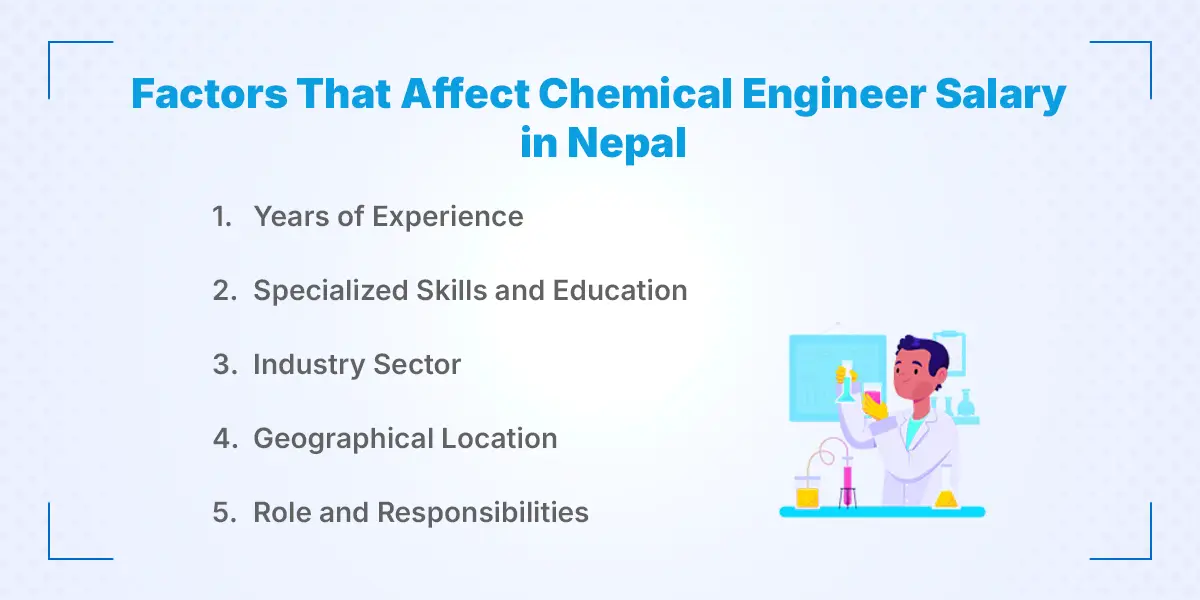
Many things affect how much a chemical engineer earns in Nepal. Salary is not just about the degree you have; experience, skills, and the type of company also matter. Where you work and what role you take on can make a big difference, too. Let’s look at the main factors that can change your pay.
1. Years of Experience
One of the biggest factors is how long you have been working. Fresh graduates usually earn less, while engineers with 3–5 years of experience get higher pay. Those with more than 7 years can earn significantly more. Experience helps you handle projects better and take on more responsibility. Companies value experienced engineers because they need less supervision. As you grow, your salary usually grows too.
2. Specialized Skills and Education
Having special skills or advanced education can increase your salary. Engineers with a master’s degree or specialized training often earn more than those with just a bachelor’s. Skills in process optimization, safety, or R&D are highly valued. Certifications and extra training in your field can also lead to higher pay. Companies pay more for engineers who can solve complex problems efficiently. Continuous learning is important for growth.
3. Industry Sector
The industry you work in affects your salary a lot. Chemical engineers in pharmaceuticals, energy, or large manufacturing companies usually earn more than those in small labs or factories. Multinational companies often pay the highest. Some sectors also offer extra benefits like bonuses or allowances. Working in high-demand industries can improve your career growth.
4. Geographical Location
Where you work in Nepal matters too. Jobs in Kathmandu or industrial areas often offer higher salaries. Rural areas or smaller towns may have lower pay. Living in bigger cities also gives better exposure to projects and networking. Some companies provide extra perks for employees working away from city centers.
5. Role and Responsibilities
Your job title and responsibilities affect pay as well. Engineers who manage teams or lead projects earn more than those doing basic lab or plant work. Supervisory roles, safety management, and project planning usually come with higher pay. More responsibility means higher accountability, which companies reward. Taking on bigger roles can fast-track your salary growth.
What Qualifications are Needed for Chemical Engineers in Nepal?
To work as a chemical engineer in Nepal, you need at least a bachelor’s degree in chemical engineering or a related field, and extra skills, certifications, or practical experience can boost your career and salary.
1. Bachelor’s Degree in Chemical Engineering
A bachelor’s degree in chemical engineering is the standard requirement. It usually takes four years to complete and covers subjects like chemistry, physics, mathematics, and process engineering. This degree gives you the foundation needed to understand and design chemical processes. Universities in Nepal and abroad offer this program. Graduates can work in labs, factories, or industrial plants. Having a recognized degree is essential to get entry-level jobs. Some companies may also prefer candidates with internships or practical project experience during their studies.
2. Master’s Degree or Specialized Courses
A master’s degree or specialized courses are not mandatory, but they can help you earn more. They focus on advanced topics like process optimization, chemical safety, or research and development. Engineers with a master’s degree often get higher-paying roles or leadership positions. Specialized courses and certifications in areas like quality control, environmental management, or plant operations are also valued. This additional education shows expertise and commitment. It can make a big difference in competitive industries.
3. Practical Experience and Internships
Hands-on experience is very important for chemical engineers. Internships, industrial training, or project work during studies can make you job-ready. Employers value candidates who understand real-world processes, not just theory. Experience helps you handle responsibilities and improves problem-solving skills. Even entry-level salaries are higher for those with practical experience. Continuous learning on the job also contributes to career growth.
4. Additional Skills and Certifications
Some extra skills and certifications can boost your career and salary. Skills in process simulation, safety management, or lab techniques are highly valued. Certifications from recognized institutes can make your resume stronger. Soft skills like teamwork, communication, and project management are also important. Engineers with both technical and soft skills are often preferred for higher positions. These qualifications help you grow faster in your career in Nepal.
Skills That Increase a Chemical Engineer's Salary
Some skills can help chemical engineers earn more in Nepal. It’s not just about having a degree; the right abilities can make you more valuable to employers. Learning new technical skills or improving soft skills can increase your salary and career growth. Let’s look at the most important skills that make a difference.
1. Technical Knowledge and Process Skills
Strong technical knowledge is key to higher pay. Engineers who understand chemical processes, production systems, and safety rules are in demand. Skills in process optimization, quality control, and lab techniques help you solve problems quickly. Using modern tools and software for chemical engineering also adds value. Employers are willing to pay more for engineers who can improve efficiency and reduce waste. Continuous learning in technical areas keeps your skills fresh.
2. Software and Computer Skills
Computer and software skills can increase salary, too. Programs like MATLAB, Aspen Plus, or AutoCAD are used in chemical engineering jobs. Knowing how to simulate processes or design equipment can make you more productive. Engineers with software skills can handle projects faster and with fewer mistakes. This makes them highly valuable to companies. Even basic computer and spreadsheet skills help in reporting and planning work.
3. Communication and Teamwork
Good communication is important for better roles and pay. Engineers often work with teams, supervisors, or clients. Being able to explain ideas clearly and work well with others is highly valued. Managers prefer engineers who can coordinate smoothly with colleagues. Teamwork skills also help you lead small projects or supervise others. Strong communication can lead to promotions and a higher salary.
4. Problem-Solving and Analytical Skills
Problem-solving is one of the most important skills for a chemical engineer. Companies pay more for engineers who can identify issues and find solutions quickly. Analytical thinking helps in process design, safety, and production optimization. Engineers who can troubleshoot equipment or improve efficiency stand out. These skills reduce mistakes and save costs, making them very valuable. Practicing problem-solving regularly can also help your career growth.
How to Start a Career as a Biomedical Engineer in Nepal?
To start a career as a biomedical engineer in Nepal, you need a bachelor’s degree in biomedical engineering or a related field, along with practical experience and specialized skills. This degree is the basic requirement to enter the field, giving you the technical foundation to work with medical devices, healthcare systems, or research labs. Beyond the degree, internships, certifications, and hands-on projects make you more competitive and increase your chances of landing a good job. Let’s break down the main steps to start your career.
1. Earn a Relevant Degree
A bachelor’s degree in biomedical engineering is essential. Some related fields, like electronics or mechanical engineering with a biomedical focus, can also work. The degree teaches subjects like anatomy, physiology, electronics, and biomaterials. Universities in Nepal and abroad offer these programs. Completing your degree gives you the knowledge to work with medical equipment and healthcare systems. Entry-level jobs usually require this formal education.
2. Gain Practical Experience
Practical experience is very important for biomedical engineers. Internships in hospitals, medical device companies, or labs help you understand real-world applications. Experience teaches you how to maintain, design, or test biomedical equipment. It also improves problem-solving skills and makes you job-ready. Employers value candidates who have hands-on experience because they need less training. Even small projects or volunteering in healthcare tech can add value.
3. Acquire Specialized Skills and Certifications
Extra skills can increase your chances of higher pay and better jobs. Skills in medical device design, regulatory compliance, or software for biomedical applications are highly valued. Certifications in areas like clinical engineering or biomedical equipment maintenance can help. Specialized skills make you stand out in competitive job markets. Employers prefer engineers who can handle advanced tasks efficiently. Continuous learning keeps you updated with new technologies.
4. Network and Seek Job Opportunities
Networking is helpful to find the right job. Attend industry events, workshops, or seminars for biomedical engineers. Connect with professionals and join online communities to learn about openings. Some jobs are only advertised through referrals or professional contacts. Also, look for jobs in trusted job portals like Kumari Job. You can find thousands of job vacancies over there.
Conclusion
Chemical engineering in Nepal offers a rewarding career for those who are willing to build their skills and gain practical experience. Salaries grow as you gain expertise, take on more responsibilities, and work in specialized industries. Engineers who continuously improve their knowledge, pursue certifications, and adapt to industry demands are often the most successful. With opportunities across manufacturing, pharmaceuticals, energy, and research, chemical engineers can enjoy both professional growth and financial stability.
Choosing this career means not only contributing to important industrial and scientific work but also opening doors to leadership roles and international opportunities. For anyone passionate about science and problem-solving, chemical engineering in Nepal can be both fulfilling and lucrative.
Frequently Asked Questions
Submit your comments

Get Our App On



What is the Public Relations Officer Salary in Nepal
VIEW DETAILS
What Is the Salary of a Ticketing Officer in Nepal?
VIEW DETAILS
What Is the Salary of a Travel Consultant in Nepal?
VIEW DETAILS
How to Become an Auditor in Nepal
VIEW DETAILS


Loading Comments...