



How much do automobile engineers actually earn in Nepal, and is this career financially rewarding? With the rapid growth of vehicles, service centers, and electric mobility in the country, automobile engineering has become an attractive career choice. However, salary expectations often vary based on experience, skills, and industry, making it important to understand the real earning potential before choosing this path.
In this blog, we delve into the details of automobile engineer salary in Nepal, covering entry-level, mid-level, and senior-level earnings. You’ll also learn how salary differs by industry, what factors influence pay, and how automobile engineers can increase their income over time. This guide will help you make informed career decisions with clarity and confidence as you search for the best engineering jobs in Nepal.
In this blog
Who Is an Automobile Engineer?
An automobile engineer is a professional who designs, develops, tests, and maintains vehicles and automotive systems such as engines, braking systems, transmissions, and electrical components. In Nepal, automobile engineers play a vital role in supporting the growing automotive sector, including vehicle servicing, manufacturing support, and the rise of electric vehicles. They combine mechanical, electrical, and software knowledge to ensure vehicles operate safely and efficiently. As vehicle technology advances, their role is becoming more technical and in-demand.
What Does an Automobile Engineer Do?
- Designing and improving vehicle systems for performance and safety
- Diagnosing mechanical and electrical faults in vehicles
- Supervising vehicle maintenance, servicing, and repair work
- Ensuring quality control and compliance with industry standards
- Supporting the adoption of electric and hybrid vehicle technologies
- Assisting in vehicle testing, inspection, and performance evaluation
- Coordinating with technicians, suppliers, and management teams
What Is the Average Automobile Engineer Salary in Nepal?
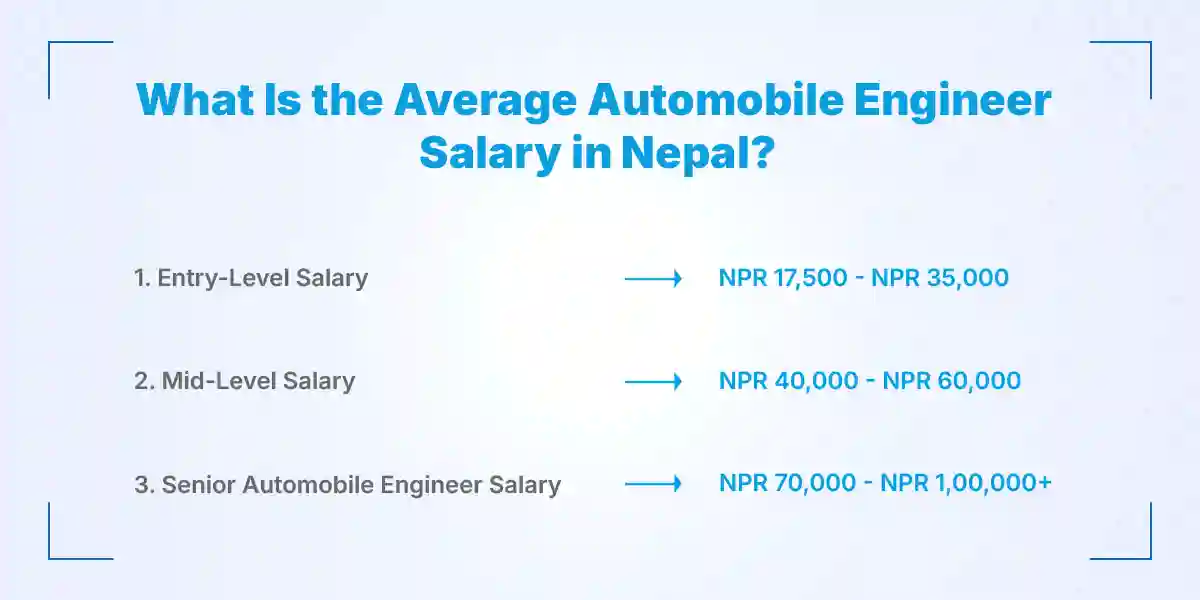
The average automobile engineer salary in Nepal ranges from around NPR 17,500 at the entry level to over NPR 1,00,000 per month for senior professionals. Salary levels depend on experience, technical skills, employer type, and location. Fresh graduates usually start with basic pay, while experienced engineers working in specialized or managerial roles earn significantly more. Engineers with exposure to modern vehicle technologies and electric vehicles often receive higher compensation. Overall, automobile engineering offers steady salary growth over time.
1. Entry-Level Salary
Entry-level automobile engineers in Nepal earn between NPR 17,500 and NPR 35,000 per month. These professionals are usually fresh graduates or have less than two years of experience. They work in trainee or junior roles at workshops, dealerships, or service centers. At this stage, the focus is on learning vehicle diagnostics, servicing, and basic mechanical systems. Salary increases as practical skills and confidence improve, providing a clear path for growth in entry-level jobs.
2. Mid-Level Salary
Mid-level automobile engineers typically earn between NPR 40,000 and NPR 60,000 per month. This level includes engineers with around 3 to 5 years of experience. They handle complex repairs, supervise technicians, and manage daily service operations. Employers value their technical expertise and problem-solving skills. Many professionals at this stage also receive performance-based incentives and bonuses as they move into mid-level jobs in Nepal.
3. Senior Automobile Engineer Salary
Senior automobile engineers in Nepal earn from NPR 70,000 to NPR 1,00,000 or more per month, depending on their role. These engineers have over five years of experience and often work as service managers or technical heads. Their responsibilities include team leadership, advanced diagnostics, and operational planning. Higher salaries reflect their expertise and strategic role. In specialized or large organizations, earnings can exceed this range.
Automobile Engineer Salary in Nepal by Industry
The automobile engineer's salary in Nepal also varies significantly by industry, as different sectors demand different skill levels and responsibilities. Engineers working in manufacturing or heavy equipment sectors usually earn more than those in small service workshops. Government and public sector jobs offer stable income with long-term benefits, while private companies may provide higher performance-based pay. Choosing the right industry plays an important role in long-term earning potential. Below is a breakdown of salary ranges by major industries, helping you understand the average salary in Nepal.
1. Automobile Manufacturing Companies
Automobile engineers working in manufacturing companies in Nepal generally earn between NPR 40,000 and NPR 80,000 per month. These roles involve quality control, production planning, testing, and technical supervision. Engineers with experience in assembly processes and modern manufacturing systems earn higher pay. Senior engineers and managers in large manufacturing units can earn even more. This sector values technical accuracy and process efficiency.
2. Automobile Service Centers and Dealerships
In automobile service centers and dealerships, engineers typically earn between NPR 25,000 and NPR 60,000 per month. Entry-level engineers usually start on the lower end, while experienced service engineers earn more. Salaries may increase through commissions, incentives, or performance bonuses. Engineers handling premium or electric vehicles often receive better compensation. Customer service and diagnostic skills are highly valued in this sector.
3. Construction and Heavy Equipment Companies
Automobile engineers working with construction vehicles and heavy equipment earn around NPR 50,000 to NPR 90,000 per month. These engineers maintain machinery such as loaders, excavators, and cranes. The job requires strong mechanical knowledge and field experience. Due to the technical complexity and demanding work conditions, salaries are higher. Experienced engineers in large projects may earn above this range.
4. Government and Public Sector Jobs
In government and public sector jobs, automobile engineers usually earn between NPR 35,000 and NPR 70,000 per month. Salaries are structured according to government pay scales and experience levels. While the pay may be lower than in the private sector initially, job security and benefits are strong. Promotions and annual increments provide steady income growth. These roles appeal to engineers seeking stability and long-term careers.
Factors That Influence Automobile Engineer Salary in Nepal
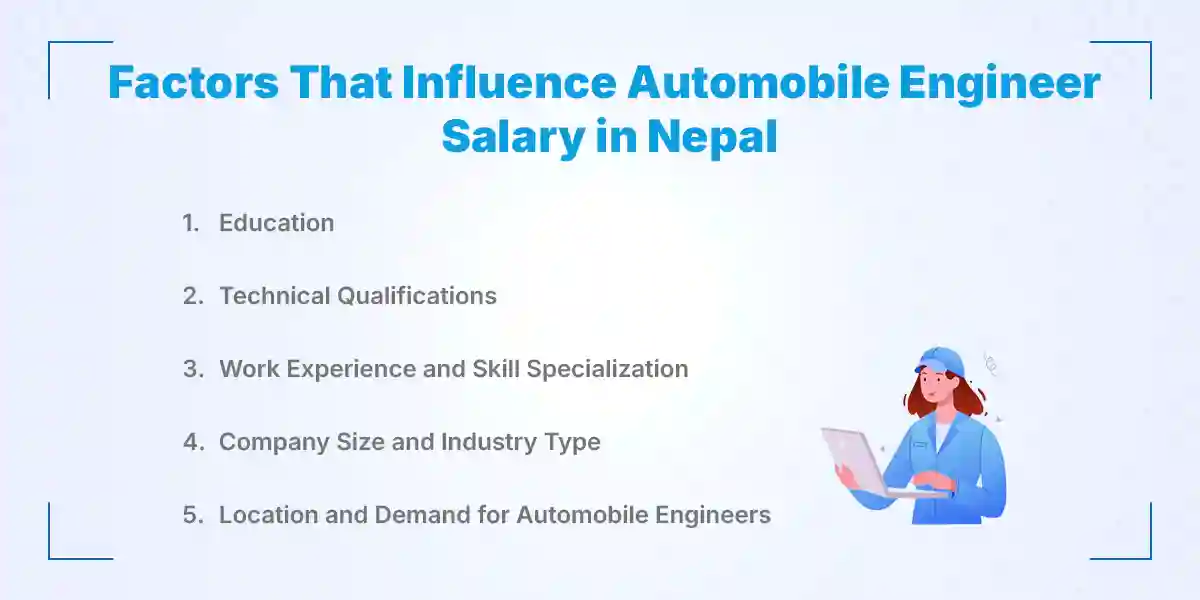
The automobile engineer salary in Nepal is influenced by multiple professional and market-related factors. While experience plays a major role, education, technical expertise, and the type of employer also significantly affect earnings. Engineers working in high-demand sectors or major cities usually earn more. Understanding these factors helps professionals plan their career path strategically. Below are the key elements that determine what is considered a good salary in Nepal.
1. Education
Educational background directly impacts an automobile engineer’s starting salary and growth potential. Engineers with a bachelor’s or master’s degree in automobile or mechanical engineering generally earn higher pay. Graduates from reputed institutions are often preferred by employers. Strong academic performance can help secure better entry-level positions. Education forms the foundation for career advancement.
2. Technical Qualifications
Technical certifications and specialized training increase an engineer’s value in the job market. Skills in diagnostics, electric vehicles, automation, or advanced vehicle systems lead to higher salaries. Employers prefer engineers who stay updated with modern automotive technologies. Certified professionals often receive priority for promotions. Technical expertise directly boosts earning potential.
3. Work Experience and Skill Specialization
Work experience is one of the strongest factors influencing salary growth. Engineers with hands-on experience and specialized skills earn significantly more than generalists. Experience improves problem-solving ability and operational efficiency. Senior engineers handle complex tasks and leadership roles. This justifies higher compensation levels.
4. Company Size and Industry Type
Large companies and multinational firms usually offer higher salaries than small workshops. Industries like manufacturing, heavy equipment, and electric vehicles pay more due to technical demands. Established companies also provide benefits and incentives. The type of industry determines workload and compensation structure. Choosing the right sector impacts long-term income.
5. Location and Demand for Automobile Engineers
Location plays a key role in salary differences across Nepal. Engineers working in major cities or industrial hubs earn more due to higher demand. Regions with growing automotive activity offer better opportunities. High demand leads to competitive salaries. Location-based demand can accelerate career growth.
What Qualifications Are Needed to Be an Automobile Engineer in Nepal?
To become an automobile engineer in Nepal, candidates need a relevant engineering degree along with practical skills and industry exposure. Employers look for a mix of academic knowledge, technical ability, and hands-on experience. Continuous learning is important due to rapidly changing automotive technologies. Strong qualifications help engineers secure better roles and higher salaries.
1. Educational Qualifications for Automobile Engineers
A bachelor’s degree in automobile engineering, mechanical engineering, or a related field is essential. Many employers prefer graduates from recognized universities or technical institutes. Higher education improves technical understanding and job prospects. Some roles may require postgraduate qualifications for senior positions. Education provides the theoretical foundation for practical work.
2. Skills Required in Automobile Engineering Jobs
Automobile engineers need strong mechanical, electrical, and diagnostic skills. Knowledge of vehicle systems, engine performance, and safety standards is crucial. Problem-solving and analytical thinking help in fault diagnosis. Communication skills are also important for teamwork and client interaction. Technical adaptability increases employability.
3. Training, Internships, and Practical Exposure
Practical training and internships play a major role in career development. Hands-on experience helps engineers apply theoretical knowledge effectively. Many companies prefer candidates with workshop or dealership exposure. Internships also improve understanding of real-world challenges. Practical exposure accelerates skill development and salary growth.
4. Career Path and Professional Growth
Automobile engineers usually start in junior roles and progress with experience. Career growth includes moving into supervisory, managerial, or specialist positions. Continuous learning supports long-term advancement. Industry exposure shapes professional maturity. A clear career path leads to higher responsibility and income.
How Can Automobile Engineers Increase Their Salary in Nepal?
Automobile engineers can increase their salary in Nepal by upgrading technical skills, gaining experience, and choosing high-demand specializations. Salary growth is faster for professionals who continuously adapt to new automotive technologies. Employers reward engineers who bring efficiency, innovation, and leadership to their roles. Strategic career moves and certifications also play a key role. Long-term growth depends on skill development and industry positioning.
1. Advanced Technical Skills and Certifications
Developing advanced technical skills significantly boosts earning potential. Certifications in vehicle diagnostics, engine management systems, or safety standards make engineers more valuable. Employers prefer certified professionals for complex roles. Technical expertise increases job security and promotion opportunities. Continuous learning keeps skills relevant in a competitive market.
2. Specialization in EV, Diagnostics, or Automation
Specializing in electric vehicles, advanced diagnostics, or automotive automation leads to higher salaries. These areas are growing rapidly in Nepal’s automotive industry. Specialized engineers are in short supply, increasing demand and pay. EV and automation skills are especially future-proof. Specialization creates opportunities in premium sectors.
3. Gaining Industry Experience and Leadership Roles
Experience combined with leadership responsibilities leads to higher income. Senior engineers managing teams or operations earn more than technical-only roles. Leadership skills improve decision-making and efficiency. Employers reward professionals who handle responsibility well. Experience builds trust and professional credibility.
4. Switching to High-Paying Automotive Sectors
Moving to high-paying sectors can significantly increase salary. Industries like manufacturing, heavy equipment, and electric vehicle companies offer better compensation. Large organizations provide growth opportunities and incentives. Strategic job switches accelerate income growth. Choosing the right sector impacts long-term earnings.
Future Scope of Automobile Engineering Careers in Nepal
The future of automobile engineering careers in Nepal looks promising due to rising vehicle usage and technological advancement. Growth in infrastructure, transportation, and electric mobility is increasing demand for skilled engineers. The shift toward modern automotive systems requires trained professionals. Career opportunities are expanding across the private and public sectors. Overall, automobile engineering offers strong long-term potential.
1. Growing Demand for Skilled Automobile Engineers
Demand for skilled automobile engineers is increasing across Nepal. Vehicle imports and service centers continue to grow each year. Employers seek professionals who can handle modern vehicle technologies. Skilled engineers enjoy better job security and salary growth. Demand is highest in urban and industrial regions.
2. Impact of Electric Vehicles and Automotive Technology
Electric vehicles are transforming the automotive industry in Nepal. Engineers with EV knowledge are highly valued. Automation and digital diagnostics are becoming standard. New technologies create higher-paying roles. This shift ensures long-term career relevance.
Is Automobile Engineering a Worthwhile Career in Nepal?
Yes, automobile engineering is a worthwhile career in Nepal because the automotive sector is steadily growing and offers long-term career stability. Rising vehicle imports, expanding service networks, and increasing adoption of electric vehicles are creating consistent demand for skilled engineers. The field offers diverse job opportunities across manufacturing, servicing, heavy equipment, and public sectors. Salary growth improves with experience, specialization, and technical expertise. Engineers also benefit from practical skill development and leadership opportunities. Overall, automobile engineering provides a balanced mix of job security, growth, and future relevance in Nepal.
Conclusion
In conclusion, automobile engineering offers a stable and rewarding career path for professionals in Nepal. The automobile engineer's salary in Nepal varies based on experience, industry, and skill level, but the field provides steady growth over time. With the expansion of vehicle usage, service centers, and modern automotive technology, skilled engineers continue to be in demand. Continuous learning, specialization, and practical exposure play a key role in achieving long-term success and higher earnings in this profession.
In the second phase of career growth, automobile engineers can explore diverse jobs in Nepal across manufacturing, electric vehicles, construction, and the public sector. As technology advances and mobility needs increase, automobile engineers who adapt and upgrade their skills will find strong opportunities, competitive salaries, and sustainable career growth within the Nepalese job market.
Frequently Asked Questions
Submit your comments

Get Our App On



What is the Public Relations Officer Salary in Nepal
VIEW DETAILS
What Is the Salary of a Ticketing Officer in Nepal?
VIEW DETAILS
What Is the Salary of a Travel Consultant in Nepal?
VIEW DETAILS
How to Become an Auditor in Nepal
VIEW DETAILS


Loading Comments...