


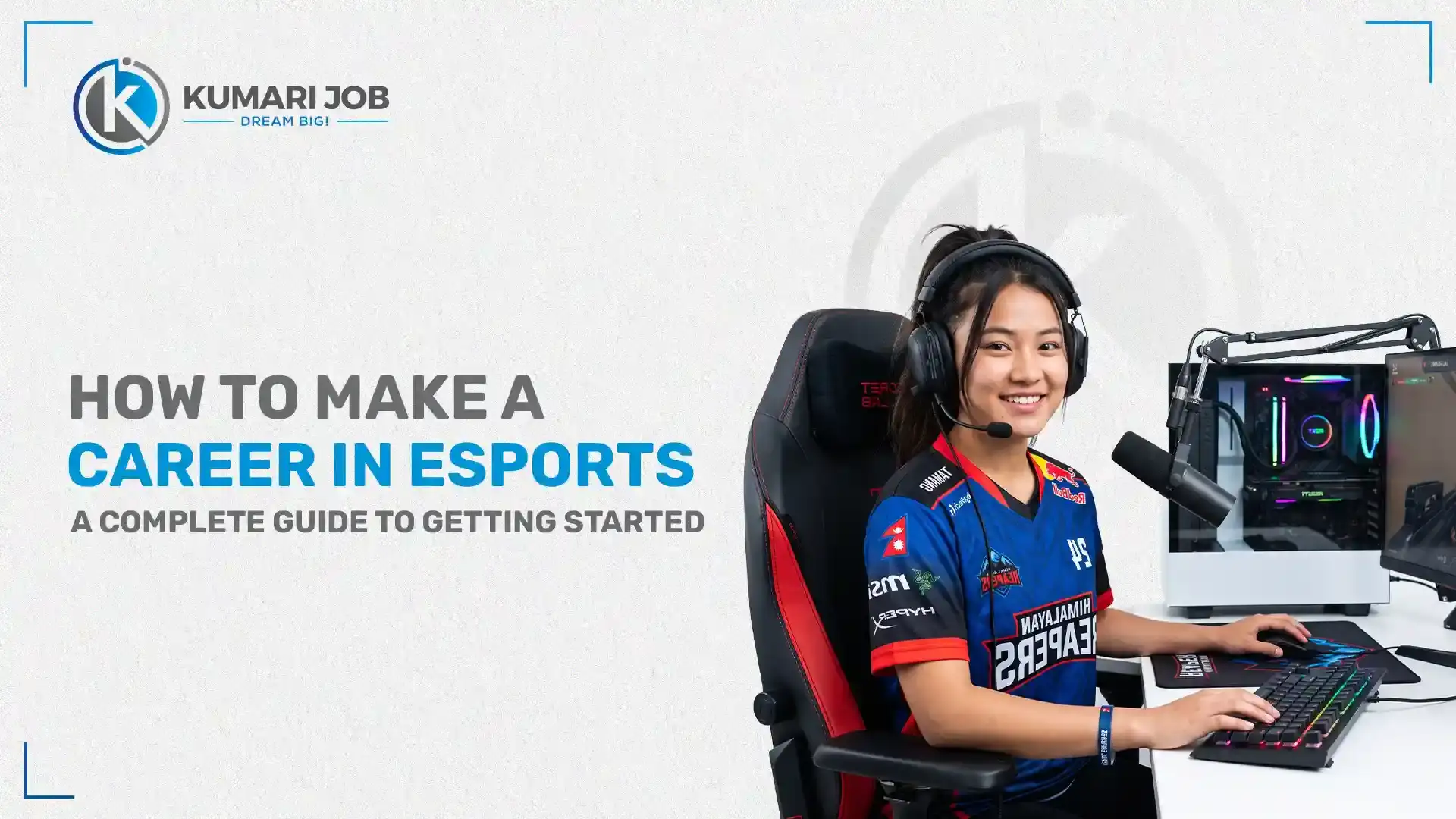

A talented gamer in Kathmandu spends four hours a night ranking up in Free Fire or PUBG Mobile, only to hear the same question from parents: "Where is this going? Family members see the hours on screen and worry about wasted time, while the player sees skill, strategy, and a real shot at something bigger. That gap between passion and a paycheck is the single biggest obstacle facing Nepali gamers today.
Esports has grown into a structured industry with real jobs beyond the player's seat coaching, event management, content creation, and team operations all need trained people. This guide breaks down every entry point into an esports career in Nepal, the skills each role demands, and where to find open positions once ready to apply.
In this blog
What Is Esports and Why Is It a Viable Career Choice?
Esports, or electronic sports, is organized competitive gaming where players and teams compete professionally in tournaments and leagues. It has developed into a career industry that offers opportunities beyond professional playing, including coaching, game analysis, team management, content creation, streaming, event management, and esports marketing.
- Growing industry: Increasing gaming audiences, tournaments, leagues, and esports organizations are creating more professional opportunities.
- Multiple career paths: You can work as a player, coach, analyst, manager, streamer, content creator, commentator, or event professional.
- Income opportunities: Professionals can earn through salaries, tournament prize money, sponsorships, streaming, content creation, and brand partnerships.
- Skill-based career: Gaming ability, communication, teamwork, strategy, leadership, content creation, and digital skills can help build an esports career.
- Opportunities in Nepal: Nepalese gamers can explore competitive gaming, esports teams, tournaments, streaming, content creation, and esports-related business opportunities.
Different Career Paths in the Esports Industry
An esports career goes beyond becoming a professional player. The industry offers opportunities in coaching, content creation, management, events, marketing, media, and technology.
- Professional Esports Player: Compete in tournaments and leagues as an individual or team player. Success requires strong gaming skills, strategy, teamwork, and the ability to perform under pressure.
- Esports Coach or Analyst: Train players, develop strategies, study opponents, and analyze gameplay or performance data. Strong game knowledge and analytical skills are important.
- Content Creator / Streamer: Create gaming videos, livestream matches, tutorials, highlights, or entertainment content. Income can come from ads, subscriptions, sponsorships, donations, and brand partnerships.
- Esports Team Manager: Manage players, schedules, contracts, travel, budgets, sponsors, and daily team operations. Communication, organization, and management skills are essential.
- Esports Event Organizer: Plan and manage gaming tournaments, including venues, registrations, schedules, brackets, prizes, logistics, and broadcasting.
- Esports Marketing and Sponsorship Professional: Promote teams, tournaments, players, and gaming brands through digital marketing, social media, public relations, and sponsorship campaigns.
- Esports Journalist or Broadcaster: Cover esports news, tournaments, player stories, and industry developments through articles, videos, interviews, or live match commentary.
- Game Developer and Esports Technology Professional: Work on game development, servers, anti-cheat systems, tournament platforms, broadcasting technology, and other technical areas that support competitive gaming.
How to Make a Career in Esports as a Professional Player
Making a career as a professional esports player starts with mastering one game, competing in amateur tournaments, and building a visible track record that teams can scout. Most successful players spend one to two years in the amateur circuit before earning a spot on a paid roster. Consistency in practice and tournament participation matters more than natural talent alone.
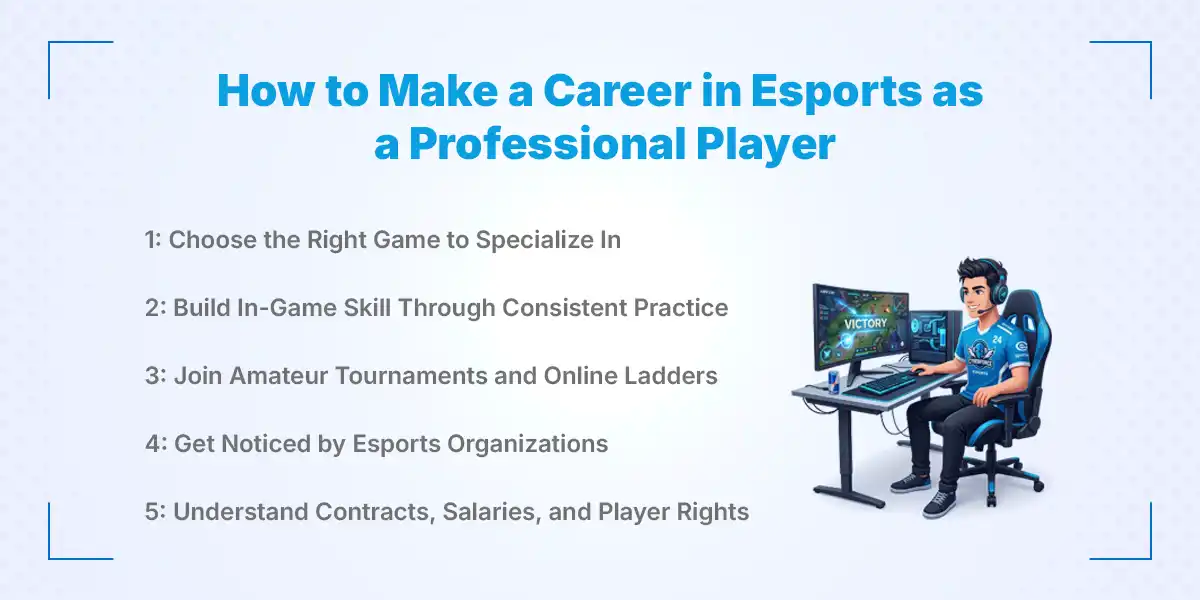
1. Choose the Right Game to Specialize In
Pick a title with an active competitive scene and a clear path to local or regional tournaments. Mobile games such as PUBG Mobile and Free Fire currently offer the most active tournament calendar in Nepal. PC titles like Valorant and Dota 2 provide access to larger regional and international competitions. Switching games later resets progress, so choosing carefully at the start saves time.
2. Build In-Game Skill Through Consistent Practice
Structured practice, including reviewing replays, drilling mechanics, and scrimmaging against other teams, builds skill faster than casual play. A daily practice routine of two to three focused hours produces better results than unstructured long sessions. Tracking performance metrics like win rate, accuracy, or objective control helps identify weak areas. Treating practice like training, not entertainment, separates competitive players from casual ones.
3. Join Amateur Tournaments and Online Ladders
Amateur tournaments and online ranked ladders provide the first real test of competitive readiness. Local platforms and Discord communities regularly host free-to-enter brackets for new teams. Performing well in these events builds a public track record that scouts and captains can review. Losses at this stage matter less than showing consistent improvement across several events.
4. Get Noticed by Esports Organizations
Organizations scout players through tournament results, streamed matches, and community reputation. Building a short highlight reel and an active social media presence increases visibility to recruiters. Direct outreach, such as messaging team managers with tournament results and availability, often works better than waiting to be discovered. Joining an established amateur team before going pro adds credibility to a player's profile.
5. Understand Contracts, Salaries, and Player Rights
A player contract should clearly state salary, prize money splits, sponsorship terms, and contract length. Base salaries for early-career players are often modest, with most income coming from prize pools and bonuses. Reading the termination and image-rights clauses closely prevents disputes if a player wants to switch teams later. Consulting someone familiar with sports or entertainment contracts before signing protects long-term career interests.
What Skills Do You Need to Succeed in an Esports Career?
A successful esports career requires a combination of gaming ability, communication, mental strength, discipline, and digital skills. The most important skills include:
- Game-specific skills: Develop strong mechanical skills, game knowledge, strategy, and decision-making.
- Communication and teamwork: Communicate clearly and work effectively with teammates, coaches, and managers.
- Mental resilience: Handle losses, criticism, competition pressure, and long practice sessions without losing focus.
- Time management: Balance esports practice with education, work, rest, and personal responsibilities.
- Digital skills: Learn basic streaming, video editing, social media, content creation, and analytics tools.
- Adaptability: Keep learning new strategies, game updates, technologies, and competitive trends.
- Leadership: Build leadership and decision-making skills if you want to progress into coaching, management, or team leadership roles.
Education, Training, and Certifications for Esports Careers
- Local gaming academies and bootcamps now offer short coaching and shoutcasting courses.
- International platforms provide certificate courses in esports management, marketing, and event operations.
- Formal degrees are not required for most roles, but business, communications, or IT backgrounds help with non-playing positions.
- Explore structured career guidance and skill-building resources on Kumarijob's Career Guidance section to plan a path into esports-adjacent roles.
How Much Do Esports Professionals Earn?
Earnings in esports vary widely by role and experience level, with players relying heavily on prize money early in their careers while support roles receive more predictable salaries.
| Role | Primary Income Source | Typical Earning Pattern |
|---|---|---|
| Professional Player | Prize pools, salary, sponsorships | Irregular, tournament-dependent |
| Streamer / Creator | Ad revenue, donations, brand deals | Grows with audience size |
| Coach / Analyst | Fixed salary from team or organization | Stable, salaried |
| Team Manager | Fixed salary plus performance bonuses | Stable |
| Event Organizer | Contract or salaried role | Project-based or stable |
Nepali esports salaries remain modest compared to global markets, but sponsorship interest is rising each year as tournament viewership grows.
Why Building a Personal Brand Matters in Esports
A personal brand matters in esports because sponsors, teams, and tournament organizers choose visible, recognizable players over anonymous ones. A consistent online presence turns tournament results into long-term opportunities, even after a playing career ends. Visibility also opens doors to coaching, casting, or content roles within the same industry.
- Post regular highlights and match analysis on YouTube, Facebook Gaming, or TikTok.
- Engage directly with the local gaming community through Discord and tournament events.
- Maintain a simple portfolio or resume showing tournament results, stats, and content work.
Where to Find Esports Jobs and Opportunities in Nepal?
You can find esports jobs in Nepal through KumariJob, gaming companies, esports teams, tournament organizers, media platforms, and digital marketing agencies. Create a strong profile and highlight your gaming experience, tournament participation, content creation, coaching skills, or relevant certifications to improve your chances of getting noticed by employers.
- KumariJob: Search for esports, gaming, content, marketing, event management, and other related vacancies.
- Esports Teams and Gaming Organizations: Look for opportunities in player management, coaching, analysis, and team operations.
- Tournament Organizers: Explore event management, tournament coordination, production, and technical roles.
- Gaming and Media Companies: Apply for content creation, journalism, video production, streaming, and social media positions.
- Digital Marketing Agencies: Look for esports marketing, social media, sponsorship, and brand promotion roles.
- Professional Networking: Use LinkedIn and gaming communities to connect with esports organizations and industry professionals.
Conclusion
The esports industry rewards people who treat gaming as a skill to develop and a network to build, not just a hobby to enjoy. Whether the goal is competing on stage or working behind the scenes in marketing, coaching, or event management, the fastest path forward is combining consistent practice with a visible, professional presence online.
Nepal's esports industry is still young enough that early-mover players, creators, and support staff alike have a real chance to define the market rather than just join it. Browse the latest esports and gaming job openings on Kumarijob to find where that opportunity starts.
Frequently Asked Questions
Submit your comments

Get Our App On



What is the Public Relations Officer Salary in Nepal
VIEW DETAILS
What Is the Salary of a Ticketing Officer in Nepal?
VIEW DETAILS
What Is the Salary of a Travel Consultant in Nepal?
VIEW DETAILS
How to Become an Auditor in Nepal
VIEW DETAILS


Loading Comments...