




Finding a software development job in Nepal can feel tough. You may keep learning new skills, but you still do not get interview calls. Or you apply to many companies, yet you are not sure what they really want. This can be stressful, especially when you see others getting hired faster. But the truth is, most people struggle because they do not follow the right steps. They learn a bit of everything, build no real projects, and apply without a proper plan.
In this guide, we will walk you through a simple path that actually works. You will learn the skills you need, where to apply, how to build a strong portfolio, and how to prepare for interviews with confidence.
In this blog
What are Software Development Jobs?
Software development jobs are roles where you create, fix, or improve computer software. In simple words, you build apps, websites, tools, or systems that people use every day. Some developers make mobile apps, some build websites, and others work on servers that run everything in the background. Every role has its own focus, but the goal is the same: to solve problems with code.
These jobs are very popular in Nepal because companies, startups, and IT firms need skilled people who can build digital products. From banking apps to eCommerce sites to mobile games, everything needs developers. And since technology keeps growing, the demand for developers also keeps increasing.
Software development is not just one job. It has many categories, and each one has its own skills and responsibilities. Here are the main types of development jobs you will find in Nepal:
Common Types of Software Development Jobs
- Web Development
- Mobile App Development
- Frontend Development
- Backend Development
- Full-Stack Development
- QA Automation
- DevOps
- Cloud Engineering
Each role offers different career paths. Some jobs are more creative, while others are more technical. Some roles require deep problem-solving, while others focus on design or user experience.
The good thing is you do not need to master all of these. You just need to choose one direction that matches your interests. Once you pick your path and learn the right skills, you can start building projects and slowly move toward your first software development job in Nepal.
Skills Required to Get Software Development Jobs in Nepal
Getting a software development job in Nepal is not just about learning to code. You need both technical knowledge and soft skills to succeed. If you focus on the right IT skills, your chances of getting hired will increase a lot.
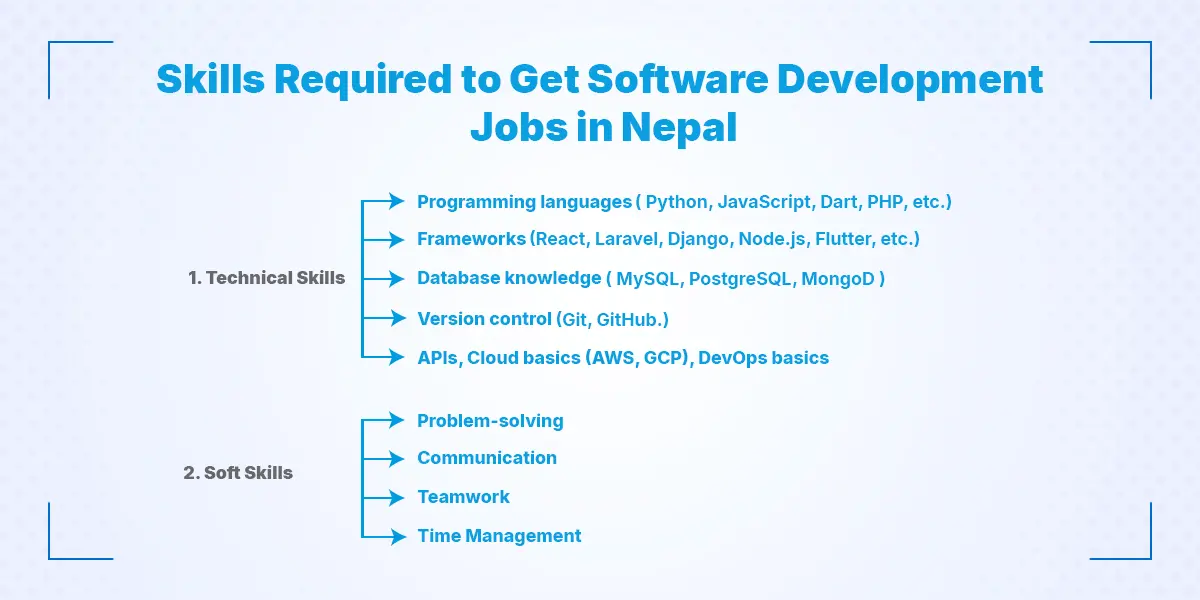
1. Technical Skills
Technical skills are the tools you use to write software and build projects. Without them, you cannot create apps or websites. Learning these skills step by step will make you confident in interviews and real work.
- Programming Languages: Python, JavaScript, Dart, and PHP for building different types of applications.
- Frameworks: React, Laravel, Django, Node.js, Flutter, to make coding faster and easier.
- Database Knowledge: MySQL, PostgreSQL, and MongoDB to store and manage data efficiently.
- Version Control: Git, GitHub, to track code changes and work with teams smoothly.
- APIs: Learn how to connect apps with other software easily.
- Cloud Basics: AWS, GCP for hosting apps and working with online servers.
- DevOps Basics: Understand deployment, automation, and server management basics.
2. Soft Skills
Soft skills are just as important as technical skills. They help you work with others and solve problems in real projects. Employers notice candidates who can communicate and work well in a team.
- Problem-Solving: Ability to find solutions when code or software has issues.
- Communication: Explain your ideas clearly to team members and managers.
- Teamwork: Work together with others to complete projects successfully.
- Time Management: Finish tasks on time without feeling stressed.
These skills together make you a strong candidate for software development jobs in Nepal. Focus on both, and you will stand out from others.
Educational Requirements
To get a software development job in Nepal, education helps a lot, but it is not the only way. Most IT companies prefer candidates who have a degree in computer science or related fields. If you have studied subjects like BSc CSIT, BE Computer, BIM, BCA, or BIT, you are in the right direction. These degrees give you basic knowledge of programming, databases, and software development concepts.
However, even if your background is not in IT, you still have a chance. Many people from non-IT fields start learning programming through boot camps or training institutes. These programs focus on practical skills, like building projects and writing real code. They are shorter than a degree but give you the skills companies look for.
The main goal is to show that you can code and solve problems. Employers care more about what you can do than the exact degree you have. If you complete projects, learn popular programming languages, and understand software development basics, you can compete for the same jobs as IT graduates.
So, whether you are a computer science student or a beginner from another field, there is a path for you. Start learning, build projects, and keep improving. With the right skills and effort, getting a software development job in Nepal is very possible.
How to Get Software Development Jobs in Nepal?
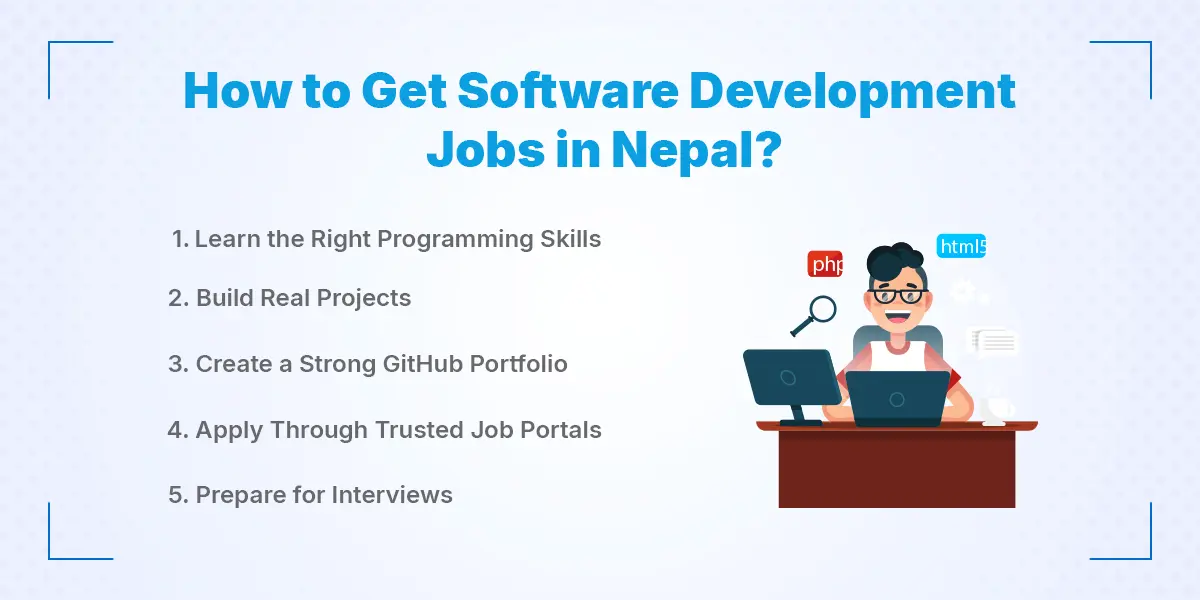
To get a software development job in Nepal, learn the right skills, build projects, create a strong portfolio, apply smartly, and prepare well for interviews. Finding a software development job can feel confusing at first. Many people do not know where to start or what companies really want. But if you follow a clear path step by step, you can get your first job faster and with less stress.
1. Learn the Right Programming Skills
Start by picking one area you like: web development, mobile apps, backend, or full-stack. Focus on learning the main programming languages for that area. Practice coding every day and try solving small problems. Watch tutorials, read guides, and join online communities. The goal is to become confident in writing real code. Companies prefer candidates who specialize instead of knowing a little of everything. Once you feel comfortable, move on to building real projects.
2. Build Real Projects
Projects show employers that you can actually code. You can start with a portfolio website to display your skills. Build a simple web app or mobile app for practice. Make sure your projects are functional and look clean. Try to add new features step by step. Even small projects help a lot. They also give you material to show during interviews.
3. Create a Strong GitHub Portfolio
Upload all your projects to GitHub so employers can see your work. Keep your code organized and clean. Show that you code regularly, not just once in a while. Add readme files to explain your projects. Commit updates often. A good GitHub profile makes a strong impression. It shows you are consistent and serious about coding.
4. Apply Through Trusted Job Portals
Use portals like Kumari Job, LinkedIn, and company career pages. Check jobs daily and apply carefully. Tailor your resume for each application. Write a short cover message showing why you are interested. Apply to multiple companies to increase chances. Keep track of where you applied.
5. Prepare for Interviews
Learn basic data structures and algorithms as they are often asked in tests. Understand OOP and system design basics. Practice coding problems online. Prepare for both technical and HR questions. Mock interviews help build confidence. The more you practice, the calmer you will be on the real day.
What is the Salary of a Software Developer in Nepal?
The salary of a software developer in Nepal ranges from NPR 25,000 to NPR 1,00,000+ per month, depending on experience and skills. Freshers often make NPR 25,000–40,000, mid-level devs get around NPR 40,000–80,000, and seniors can earn NPR 80,000+ or more. If you are just starting out, you will likely earn less, but as you gain experience and work on real projects, your pay can grow significantly. Many Nepali developers also aim for remote or international roles to increase their earnings.
1. Entry-Level Salary
For entry-level jobs, freshers in Nepal typically earn around NPR 25,000 to 40,000 per month. Very junior developers, or those still learning on the job, may earn slightly less, around NPR 20,000–35,000 per month. At this stage, the focus is more on learning, improving coding skills, and understanding how projects work in real companies. Employers expect freshers to grow and contribute more over time.
2. Mid-Level Salary
Mid-level developers, with around 3–5 years of experience, usually earn between NPR 40,000 and 1,00,000 per month, depending on their skills and the company. In mid-level jobs, you work on larger projects, write more advanced code, and may start mentoring juniors. Many mid-level developers find their work more challenging and responsible, which is why salaries are higher compared to entry-level roles.
3. Senior-Level Salary
Senior developers, with 5 or more years of experience, can earn NPR 1,00,000 or more, if they have strong skills or work remotely. Senior roles often involve leading projects, making important technical decisions, and guiding teams. This added responsibility and expertise is why senior developers are paid significantly more than juniors.
In short, your salary grows as you gain experience, strengthen your skills, and deliver real value to projects. If you focus on building strong coding abilities, learning modern tools, and showing your work in a portfolio, you can achieve a much higher salary in Nepal.
Best Courses & Training to Become a Software Developer
If you want to become a software developer in Nepal, taking the right courses can make learning faster and easier. These courses teach you practical skills that companies really look for. You also get hands-on experience by building projects while learning. Choosing the right training can help you stand out and get your first job quickly.
1. Programming Bootcamps
Programming bootcamps are short, intensive courses designed to teach you coding quickly. You will learn important programming languages and build real projects. Many bootcamps focus on practical skills instead of theory. They are perfect for beginners who want to start coding fast. Bootcamps often include guidance from mentors and peer support. By the end, you have a portfolio to show employers.
2. MERN/MEAN Stack Training
MERN and MEAN stack courses are specifically for web development jobs using popular tools like MongoDB, Express, React or Angular, and Node.js. You learn both front-end and back-end development. These courses help you build complete web applications from scratch. Many Nepali IT companies look for developers with these skills. You also practice using databases and servers. Completing a stack course makes you job-ready for web developer roles.
3. Python Development
Python courses teach a popular, easy-to-learn language used in web apps, automation, and data science. You will write real programs and solve problems. Python is beginner-friendly and in demand in Nepal. Many companies hire Python developers for backend, automation, and AI projects. The course also helps you understand basic programming concepts clearly. By building projects, you gain confidence to apply for jobs.
4. Mobile Development (Flutter, Kotlin)
Mobile development courses focus on building apps for Android and iOS. Flutter and Kotlin are popular tools in Nepal for mobile apps. You will learn how to design interfaces and make apps work smoothly. These courses include real projects to show in your portfolio. Companies prefer candidates who can create apps from start to finish. Mobile development skills increase your chances of getting good jobs.
5. Backend Development
Backend courses teach how to manage servers, databases, and APIs. You learn how apps and websites work behind the scenes. Backend skills are important for building reliable software. These courses often cover Node.js, Django, or Laravel. You will practice creating APIs and connecting databases. Employers value strong backend developers because they keep systems running smoothly.
6. QA Automation
QA Automation courses teach testing software using automated tools. You learn how to find bugs and improve software quality. Automation skills save time and reduce errors. Companies hire QA automation engineers to ensure their products work well. The course includes hands-on testing practice with real projects. Having QA skills makes you a more versatile developer and increases job opportunities.
Conclusion
Getting a software development job in Nepal is possible if you follow the right steps. Start by learning the skills that companies need and focus on one area you like. Build real projects and show them in a portfolio or GitHub. Apply through trusted job portals like Kumari Job and prepare well for interviews.
Remember, both technical skills and soft skills matter. Entry-level salaries may be small, but they grow fast as you gain experience. Training courses and bootcamps can help you learn faster and become job-ready. Stay consistent, keep practicing, and never stop learning. With effort and patience, you can build a successful career as a software developer in Nepal.
Frequently Asked Questions
Submit your comments

Get Our App On



What is the Public Relations Officer Salary in Nepal
VIEW DETAILS
What Is the Salary of a Ticketing Officer in Nepal?
VIEW DETAILS
What Is the Salary of a Travel Consultant in Nepal?
VIEW DETAILS
How to Become an Auditor in Nepal
VIEW DETAILS


Loading Comments...