




Are you struggling to find a suitable IT job in Nepal despite having the necessary skills? The IT industry in Nepal is booming, offering a huge range of opportunities. However, due to high competition and a lack of guidance, many talented candidates are left behind, making them frustrated and stuck. Without a proper roadmap, finding a job vacancy, preparing for interviews, and fulfilling skill requirements can feel confusing and irritating.
But don’t worry. In this guide, we will walk you through the proven steps to stand out, gain the right skills, and secure your dream IT job in Nepal. From resume building to interview cracking, we have got you covered every step of the way.
Are you ready to transform your career and unlock doors to exciting IT opportunities? Let's get started!
In this blog
What are the Most In-Demand IT Jobs in Nepal?
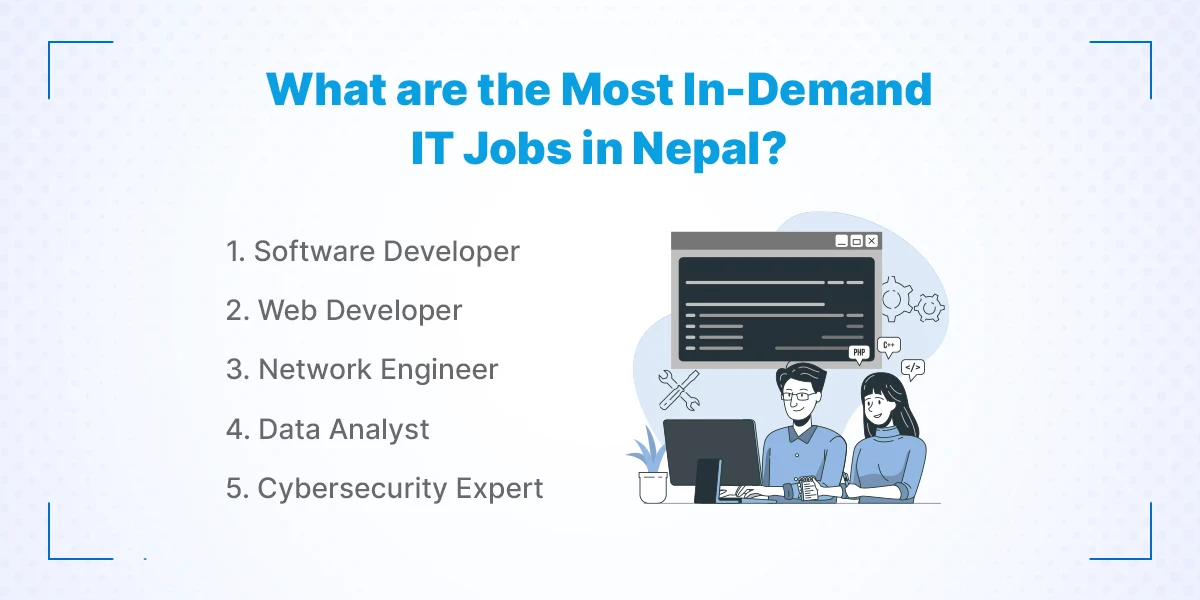
The most in-demand IT jobs in Nepal right now are software developers, web developers, network engineers, data analysts, and cybersecurity experts. These roles are growing fast because companies need skilled people to build, manage, and protect their technology.
1. Software Developer
Software developers create, develop, and maintain software programs. Software developer jobs in Nepal are in high demand, especially in IT companies, banks, startups, and multinational outsourcing firms. Proficiency in programming languages like Java, Python, JavaScript, or PHP is typically required. With the increased use of mobile and web-based applications, experienced developers are among the highest-paid IT professionals in the country.
2. Web Developer
Web developers are responsible for creating websites and web applications. They participate in both front-end (user interface) and back-end (server-side logic). As more businesses in Nepal are moving online, web developer jobs in Nepal are becoming increasingly important in enabling digital presence. Skills in HTML, CSS, JavaScript, and frameworks like React or Laravel are highly demanded.
3. Network Engineer
Network engineers enable systems to talk to each other by designing and maintaining an organization's computer networks. This includes managing LAN, WAN, routers, firewalls, and servers. With the growth of cloud computing and remote work, stable and secure networks are essential; therefore, this role is crucial across industries such as telecom, banking, and large organizations.
4. Data Analyst
Data analysts gather, clean, and interpret data to help organizations make informed decisions. Data analyst jobs in Nepal are gaining demand in sectors like finance, e-commerce, and digital marketing. To succeed in this career, expertise in tools like Excel, SQL, Power BI, and Python, along with strong analytical skills, is essential.
5. Cybersecurity Expert
Cybersecurity professionals protect systems from cyberattacks, data loss, and unauthorized use. With increased digital operations and cyberattacks, Nepalese businesses are investing in security systems. Certifications like CEH, CISSP, or CompTIA Security+ are generally required, and demand for skilled professionals is expected to increase in the future.
How to Get an IT Job in Nepal?
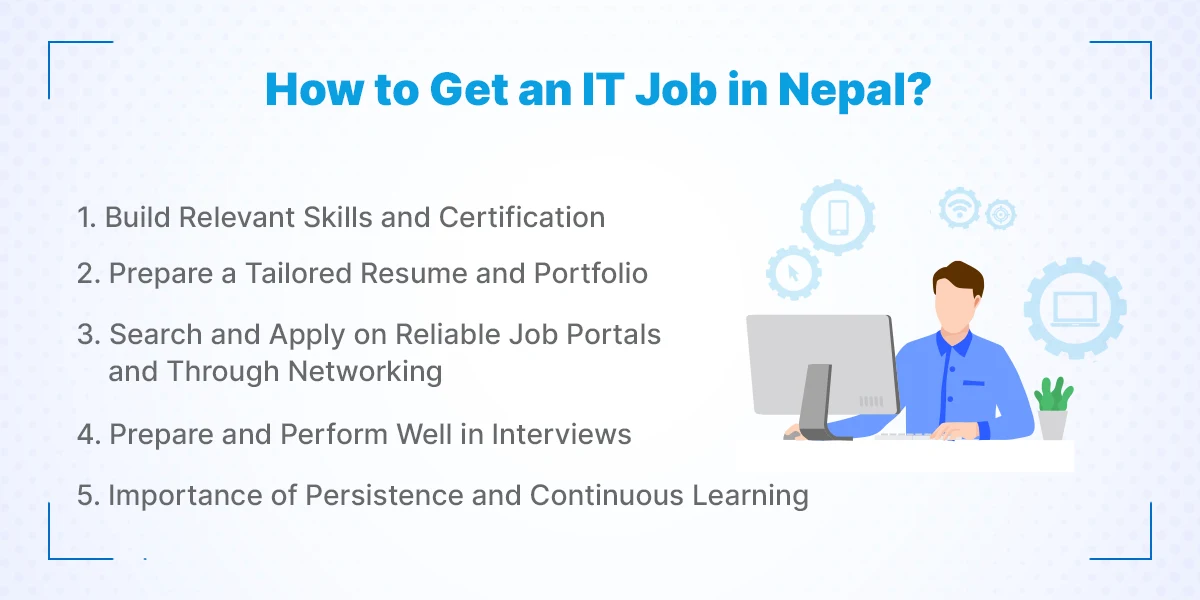
To get an IT job in Nepal, you need the right skills, a strong resume, and a smart job search strategy—browsing job portals like Kumari Job regularly can help you find the right opportunities.
1. Build Relevant Skills and Certification
Start by learning the skills needed for your desired IT career, i.e., programming, web design, or networking. Use online courses, bootcamps, or local training centers in Nepal. Courses like MERN Stack training in Nepal or UI/UX design training can help you build practical, job-ready skills. Certification (e.g., in Python, Java, or Cisco) helps in showcasing your skills to potential hiring managers. Practical experience through small projects or internships is also helpful.
2. Prepare a Tailored Resume and Portfolio
Your resume should clearly highlight your technical skills, certifications, completed projects, and any hands-on experience relevant to the IT job you're applying for. Customize it for each role by using keywords from the job description to show you're a perfect fit. Alongside your resume, build a professional portfolio that includes links to websites, apps, or GitHub projects you’ve worked on—this helps employers see your capabilities in action. Make sure your portfolio is well-organized, mobile-friendly, and always kept up-to-date.
3. Search and Apply on Reliable Job Portals and Through Networking
Use trusted job portals like Kumari Job to find the latest IT job openings in Nepal. Set up job alerts and apply consistently to increase your chances. Beyond online applications, expand your network by attending tech events, webinars, LinkedIn groups, and local developer meetups. In Nepal, many IT jobs are filled through referrals, so building genuine connections can lead to faster job offers. Don’t hesitate to directly contact companies or HR departments to ask about current or upcoming vacancies.
4. Prepare and Perform Well in Interviews
Start by practicing common IT and HR interview questions, especially those related to your technical expertise and past projects. Be ready to explain your problem-solving approach, tools you’ve used, and how you handled challenges. For technical positions, expect coding tests, whiteboard tasks, or real-time problem-solving rounds. Show confidence, be honest about your skills, and communicate clearly—employers value candidates who are not only technically sound but also reliable and easy to work with.
Helpful Blog: How to Prepare for a Job Interview in Nepal
5. Importance of Persistence and Continuous Learning
Landing your first IT job in Nepal might take time, so stay patient and consistent. Keep applying while actively learning new tools, programming languages, or frameworks that are in demand. The IT industry evolves quickly, and staying updated with current trends makes you more competitive in the job market. Every new skill or project you take on brings you one step closer to your ideal job.
Skills and Qualifications Required for IT Jobs in Nepal
To get hired in Nepal’s growing IT sector, you need more than just a degree—you need job-ready skills, certifications, and practical experience. While some positions require formal education, many employers now prioritize real-world abilities, project portfolios, and specialized certifications. Whether you're a fresher or switching careers, building the right mix of technical and soft skills is key to standing out in Nepal’s competitive IT job market.
1. Educational Background
Most IT jobs in Nepal require a degree in Information Technology, Computer Science, Software Engineering, or a related field. However, diploma holders and self-taught individuals with strong practical skills can also find opportunities, especially in software development and networking roles. For newcomers, starting with internships or junior positions is a common path to gain valuable experience and build a career in the IT industry.
2. Technical Skills
The technical skills required vary depending on the specific IT job and industry, but some common and in-demand skills include programming languages for software development, web technologies for building and maintaining websites, networking fundamentals for managing IT infrastructure, data analysis tools to interpret and leverage information, and cybersecurity knowledge to protect systems from threats. Keeping up with the latest technologies and frameworks in these areas is crucial, as the IT field evolves rapidly and employers look for candidates who can adapt and innovate:
- Programming Languages: Python, Java, C++, PHP, or JavaScript are essential for programmers to be familiar with.
- Web Development: HTML, CSS, JavaScript, and technologies like React, Laravel, or WordPress are helpful.
- Networking: Network basics, routers, IP addresses, and CCNA-level knowledge help for network-based jobs.
- Data Analysis: Excel, SQL, Python, or Power BI is needed for data-based roles.
- Cybersecurity: Basic firewalls, antivirus software, and common security threats should be understood.
3. Soft Skills
In addition to technical expertise, Nepali employers highly value soft skills that help you work effectively within teams and communicate clearly. Strong interpersonal abilities often make the difference between a good candidate and a great one, especially in collaborative IT environments:
- Communication Skills – To clearly explain your work to others.
- Problem-Solving Skills – To successfully debug or resolve tech problems.
- Teamwork – Working in teams is common for many IT projects.
- Time Management – Deadlines are crucial in most jobs.
4. Certifications (Not necessary but helpful)
While not always mandatory, certifications can significantly boost your profile and build trust with potential employers. They validate your expertise and commitment to your field. Common certifications valued in Nepal’s IT industry include:
- For coding: Python Certification, Java Certification
- For networking: CCNA, CompTIA Network+
- For cybersecurity: CEH, CompTIA Security+
- For cloud skills: AWS, Microsoft Azure certifications
5. Experience and Portfolio
Even though you're new, having some actual projects makes a huge difference. Build websites, apps, or tiny tools and add them to your portfolio. Internships, freelancing, or volunteer work in tech can also help you stand out when applying for entry-level jobs in Nepal. Employers prefer seeing what you’ve built rather than just reading about your skills on a resume.
Where to Find IT Job Vacancies in Nepal?
You can find IT job vacancies in Nepal through several reliable sources, including popular online job portals, official company career pages, professional networking sites like LinkedIn, and well-established HR consultancies such as Kumari Job. These platforms are frequently updated with the latest openings, making them a go-to resource for both fresh graduates and experienced IT professionals. Utilizing these channels not only helps you access a wide range of opportunities across different IT specializations but also allows you to apply directly to employers or connect with recruiters who can guide you through the hiring process. Regularly checking these sources and setting up job alerts can significantly increase your chances of landing your ideal IT role in Nepal.
Here are some of the best platforms to find IT job listings:
1. Online Job Portals
Online job portals like Kumari Job are among the most popular and trusted platforms for job seekers in Nepal. They feature hundreds of IT job openings across various roles, including software developers, graphic designers, IT support staff, and more. These portals offer convenient filters by job category, experience level, and location, helping you find the most relevant opportunities quickly. By signing up, you can upload your resume, apply directly to vacancies, and receive personalized job alerts to stay updated on the latest openings.
2. LinkedIn
LinkedIn is both a professional networking site and a powerful job search engine. Many IT companies in Nepal post job openings on LinkedIn. You can follow companies, directly apply for a job, and even reach out to recruiters. A complete and updated LinkedIn profile also makes you more visible to employers.
3. Company Career Pages
Large IT companies in Nepal often post vacancies on their websites. It is a good idea to check their career pages and apply directly to avoid competition from general job portals. It also shows initiative, which is something employers appreciate.
4. Facebook Groups & Tech Communities
There are active Facebook groups like “IT Job Vacancy Nepal,” “Tech Jobs Nepal,” and “Freelance IT Jobs Nepal” that share real-time job leads. You’ll find posts from recruiters, startups, and even freelancers looking to collaborate. It’s also a great space to ask questions and stay updated with IT hiring trends.
Challenges and Tips to Overcome Them
It is challenging to secure an IT job in Nepal, particularly for new graduates or those changing careers. Some of the common challenges include intense competition, limited job opportunities, and a lack of both technical and soft skills. Yet, having a healthy attitude and mind can still allow you to break through the job market. Some of the key challenges and simple solutions are listed below:
1. Lack of Experience
Many IT companies in Nepal prefer candidates who already have some real-world experience, making it difficult for freshers to land their first job despite strong academic credentials. To overcome this, focus on building a portfolio with personal or freelance projects, participate in internships, and contribute to open-source initiatives. These experiences demonstrate your skills and commitment, increasing your chances of getting hired.
Tip to Overcome:
Start by doing internships, freelancing, or open-source projects. You can also build your own websites or applications and place them in a portfolio. Even small projects show that you can implement your skills in the real world.
2. High Competition
With an increasing number of IT graduates entering the market each year, competition for IT jobs in Nepal has become fierce. It’s common for dozens, or even hundreds, of candidates to apply for a single position, making it difficult to get noticed by recruiters. To succeed, you need to go beyond just meeting the basic qualifications building specialized skills, gaining practical experience, and actively networking are essential to stand out in this crowded field.
Tip to Overcome:
Specialize in a field with high demand and limited supply. For example, mobile app development, cybersecurity, or UI/UX design. Gaining certifications and having unique projects can set you apart from the rest.
3. Insufficient Job Market
While Nepal’s IT industry is growing steadily, the number of available job openings often doesn’t keep pace with the growing number of job seekers—especially outside major cities like Kathmandu and Pokhara. This creates a gap between supply and demand, making it harder for many qualified candidates to find suitable positions. To overcome this, consider expanding your job search to remote opportunities, freelancing, or roles in emerging IT hubs within Nepal.
Tip to Overcome:
Do not consider only big companies. Discover startups, NGOs, government tech projects, and freelance platforms. You can even attempt remote work or explore part-time jobs in Nepal to gain experience while continuing your skill development. Many employers are now open to hiring capable individuals for flexible roles.
4. Weak Resume and Portfolio
A boring resume with weak examples of your work is likely to get ignored by employers. Most candidates also do not include a portfolio or links.
Tip to Overcome:
Create a clean, professional resume that highlights your key skills, projects, and achievements. Add links to your GitHub, LinkedIn, or personal website. A good portfolio can sometimes be worth more than your certifications.
5. Rapid Tech Changes
Technology continues to change very rapidly. If your skills are not updated, businesses will overlook your profile even if you have experience.
Tip to Overcome:
Continue learning. Watch technology blogs, YouTube tutorials, or enroll in an online course on platforms like Coursera, Udemy, or LinkedIn Learning. You can also join training programs offered by trusted platforms in Nepal, like Kumari Job, to gain job-ready skills. Try to set aside a little time each week to update your skills based on what employers are currently looking for.
The Future of IT Careers in Nepal
The future of IT careers in Nepal is highly promising as digital transformation accelerates across every industry. More businesses, government services, and startups are adopting online systems, creating strong demand for skilled technology professionals. From cybersecurity to software engineering, new roles are emerging faster than ever, offering excellent career growth for both beginners and experienced IT workers.
Growth Areas and Emerging Technologies
Some of the most promising areas in Nepal's IT sector are as follows:
- Artificial Intelligence (AI) and Machine Learning (ML): Businesses are now utilizing smart systems to automate tasks, make informed decisions based on insights, and optimize processes.
- Cloud Computing: Businesses are migrating data and applications to cloud infrastructure, such as AWS and Azure.
- Cybersecurity: As more individuals go online, there is a growing demand for individuals who can protect systems and information.
- Mobile App Development: More and more people are using smartphones, so companies are investing money in Android and iOS apps.
- Data Science and Analytics: Companies need smart people who can understand data and make improved decisions.
- UI/UX Design: As user experience is now a priority, creative designers are more in demand.
How to Future-Proof Your IT Career?
To stay relevant and thrive as an IT professional in Nepal’s rapidly evolving tech landscape, it’s essential to continuously adapt and grow by embracing lifelong learning. Technology changes fast, so regularly updating your skills through online courses, workshops, and certifications keeps you competitive. Staying informed about industry trends and emerging technologies—such as artificial intelligence, cloud computing, and cybersecurity—can open new career opportunities. Additionally, developing strong problem-solving abilities and effective communication skills will help you work well in diverse teams and handle complex projects, ensuring long-term success in Nepal’s dynamic IT sector:
- Keep learning: Stay up-to-date on new tools and technologies with online courses.
- Build strong roots: Study problem-solving, logic, and communication — these never go out of style.
- Get certified: Become certified in cloud computing, AI, or cybersecurity and enhance your career prospects.
- Get hands-on experience: Do actual projects, freelancing, or internships to establish a strong portfolio.
- Be adaptable: Be ready to learn something new and switch jobs as the industry evolves.
With a positive attitude and skills, your IT career in Nepal can grow for years to come.
Conclusion
Getting an IT job in Nepal is completely possible, whether you’re a fresher, career switcher, or someone aiming higher. With the right skills, smart preparation, and consistent effort, you can land a high-paying role in Nepal’s growing tech industry. Focus on practical experience, stay updated with trends, and don’t stop learning. Opportunities are available, and they’re increasing every day.
Ready to start your IT career? Explore thousands of verified job listings on the best job portal in Nepal and take your next step with confidence.
Frequently Asked Questions
Submit your comments

Get Our App On



What is the Public Relations Officer Salary in Nepal
VIEW DETAILS
What Is the Salary of a Ticketing Officer in Nepal?
VIEW DETAILS
What Is the Salary of a Travel Consultant in Nepal?
VIEW DETAILS
How to Become an Auditor in Nepal
VIEW DETAILS


Loading Comments...