


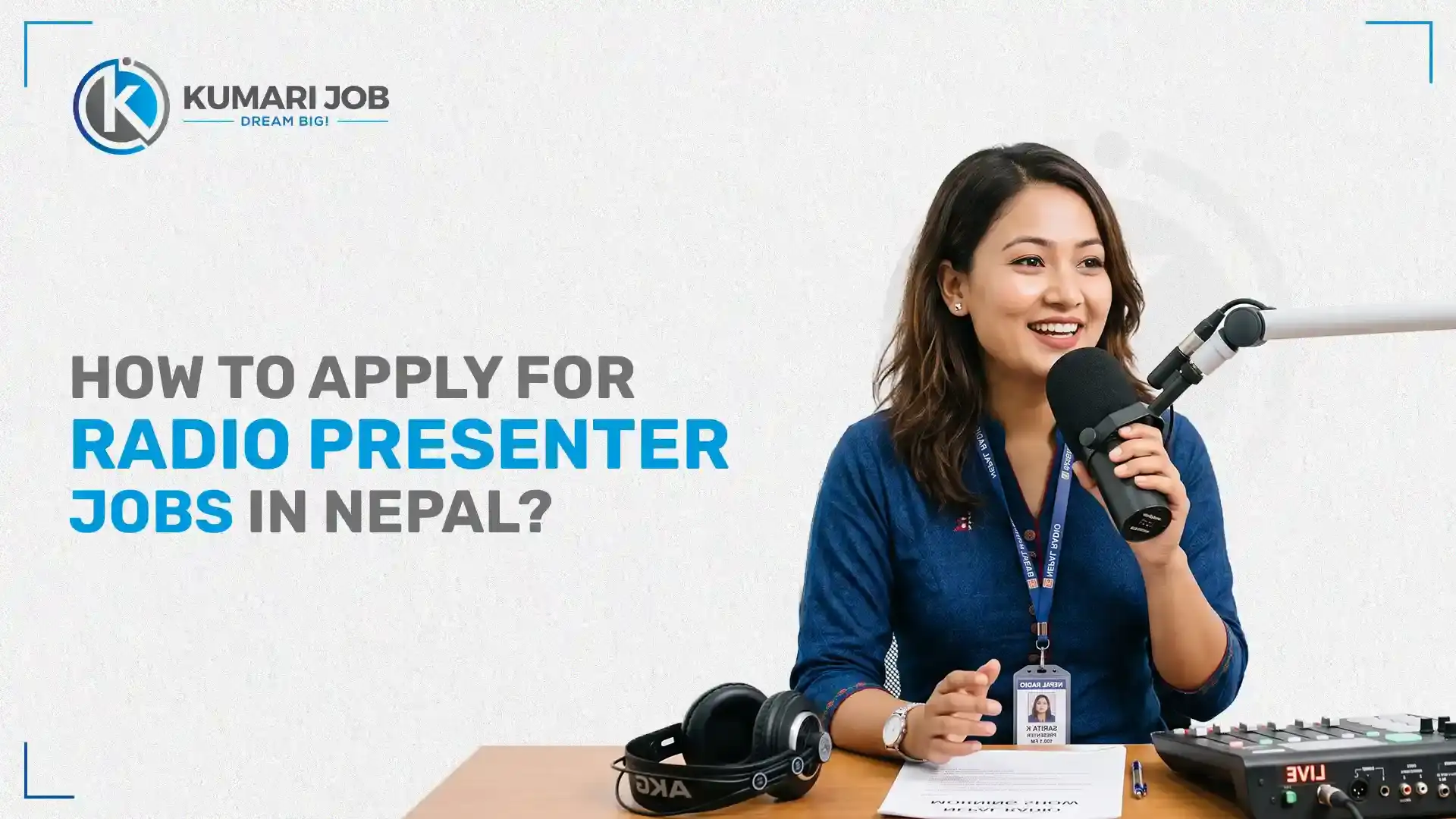

Many aspiring radio presenters in Nepal have a passion for speaking, storytelling, or entertaining audiences but struggle to find the right opportunities or understand how to start a career in broadcasting. Without the right skills, preparation, and industry knowledge, securing a radio presenter job can feel challenging, especially in a competitive media market.
The good news is that radio remains an important part of Nepal's media industry, with FM stations, online radio platforms, and digital broadcasting creating new opportunities for talented presenters. This guide explains what radio presenters do, the skills and qualifications employers look for, where to find jobs, how to apply successfully, expected salaries, career growth opportunities, and practical tips to help you begin your broadcasting career.
In this blog
What Does a Radio Presenter Do?
A Radio Presenter hosts radio programs, entertains and informs listeners, introduces music or news segments, conducts interviews, and keeps audiences engaged through clear and confident communication. They also prepare show content, interact with listeners, and work closely with producers to deliver smooth and engaging broadcasts.
Key Roles and Responsibilities
- Host live or recorded radio shows
- Introduce music, news, and programs
- Interview guests
- Share news and updates
- Engage with listeners via calls and social media
Types of Radio Presenter Jobs in Nepal
- FM Radio Presenter
- Radio Jockey (RJ)
- News Presenter
- Talk Show Host
- Sports Presenter
- Music Show Host
- Community Radio Presenter
- Podcast Host
Typical Daily Tasks
- Prepare show scripts
- Review playlists
- Host live broadcasts
- Conduct interviews
- Coordinate with producers
- Promote shows on social media
- Respond to listener feedback
Why Choose a Career as a Radio Presenter in Nepal?
A career as a Radio Presenter in Nepal offers creative work, public recognition, and opportunities to grow in the media and broadcasting industry. As FM stations, online radio platforms, and digital media continue to expand, skilled presenters are increasingly needed to engage audiences and deliver high-quality content. This profession also helps you build communication skills that are valuable across many media careers.
- High demand in FM stations, media houses, and online radio platforms.
- A creative career that lets you inform, entertain, and inspire audiences.
- Strong career growth into producer, news anchor, or station manager roles.
- Job opportunities in community, commercial, and digital radio across Nepal.
Skills Required to Become a Radio Presenter
To become a successful Radio Presenter, you need excellent communication skills, confidence, creativity, and the ability to engage listeners throughout a broadcast. Employers also value candidates who can adapt to different program formats, think quickly, and work effectively in a fast-paced media environment.
- Excellent communication and public speaking skills.
- Clear pronunciation and confident voice modulation.
- Strong interviewing and storytelling abilities.
- Creativity and quick thinking during live shows.
- Basic knowledge of audio recording and editing.
- Social media and digital content creation skills.
- Good teamwork and time management abilities.
Educational Qualifications for Radio Presenter Jobs
There is no single educational path to becoming a Radio Presenter, but employers generally prefer candidates with relevant academic qualifications, media training, and practical broadcasting experience. A combination of education, communication skills, and hands-on experience can significantly improve your chances of getting hired in Nepal's media industry.
- Complete at least +2, though a bachelor's degree is preferred.
- Study Journalism, Mass Communication, Media Studies, or English.
- Take radio presenting or broadcasting training courses.
- Attend voice training and presentation workshops.
- Gain practical experience through internships at FM stations or media houses.
Where Can You Find Radio Presenter Jobs in Nepal?
Radio Presenter jobs are available through various recruitment channels, including job portals, FM stations, media organizations, and professional networks. Regularly monitoring vacancies and building connections within the media industry can help you discover more opportunities.
- Search vacancies on job portals like Kumari Job and LinkedIn.
- Apply to private and community FM radio stations.
- Check openings at national broadcasting organizations.
- Explore opportunities with community radio stations.
- Look for hosting roles in TV and multimedia companies.
- Apply to media agencies and production houses.
- Follow media companies on social media for job updates.
- Build industry connections through media events and workshops.
How to Apply for Radio Presenter Jobs in Nepal?
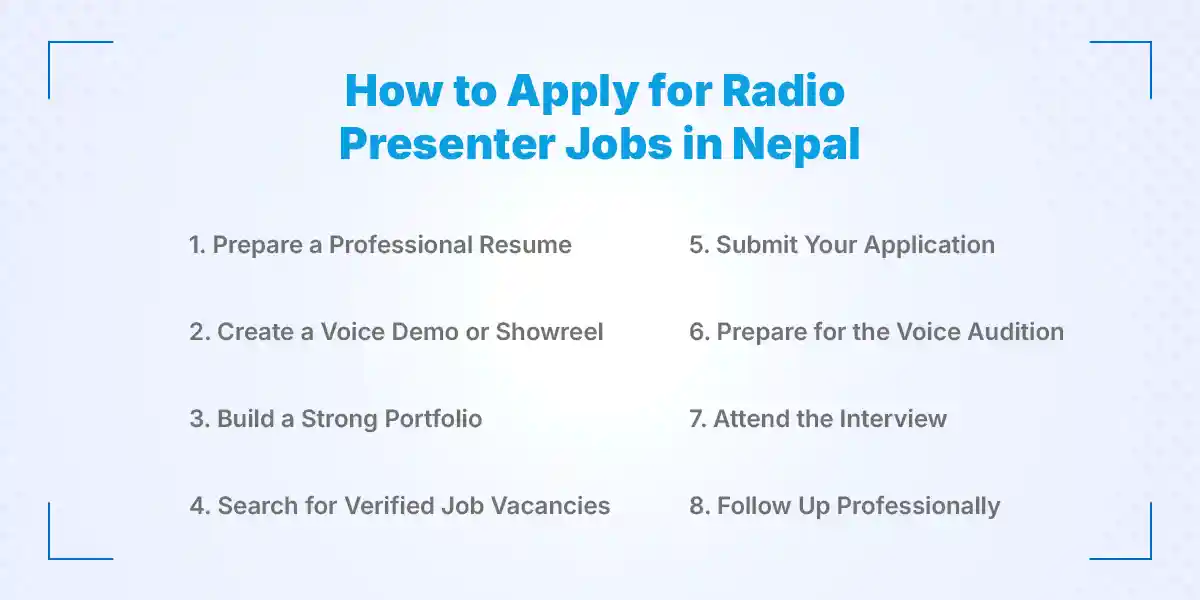
Applying for a Radio Presenter job requires more than simply submitting a resume. Employers look for candidates who can communicate confidently, demonstrate their presentation skills, and show genuine enthusiasm for broadcasting. Following a structured application process can significantly improve your chances of getting shortlisted.
1. Prepare a Professional Resume
Create a clear and well-organized resume that highlights your education, communication skills, media experience, and achievements. Include any experience related to public speaking, event hosting, debating, journalism, or content creation. Tailor your resume to match the requirements of each job posting and use an ATS-friendly format with relevant keywords. Proofread your resume carefully to ensure it is free from spelling and grammar errors.
2. Create a Voice Demo or Showreel
Record a professional voice demo that showcases your speaking style, pronunciation, confidence, and presentation skills. Include a short introduction, a news segment, a music show sample, or an interview-style presentation to demonstrate versatility. Keep the recording clear with good audio quality and minimal background noise. Upload your demo to Google Drive, YouTube, or a portfolio website so employers can easily access it.
3. Build a Strong Portfolio
Create a portfolio that highlights your broadcasting experience, certificates, event hosting, podcasts, or media projects. Include links to voice recordings, social media content, videos, or published work that demonstrate your communication abilities. Even if you are a fresher, showcase university projects, internships, or volunteer work related to media. A professional portfolio helps employers evaluate your practical skills beyond your resume.
4. Search for Verified Job Vacancies
Look for Radio Presenter vacancies on trusted job portals such as Kumari Job, LinkedIn Jobs, and other recruitment websites. Visit the career pages of FM stations, media houses, and broadcasting organizations to find direct job announcements. Follow media companies on social media because many openings are shared through their official pages. Apply only to verified vacancies and carefully review the job requirements before submitting your application.
5. Submit Your Application
Send your resume, cover letter, and voice demo according to the employer's application instructions. Make sure all required documents are complete and professionally formatted before applying. Personalize your cover letter by explaining why you are interested in the role and how your skills match the position. Submit your application before the deadline to avoid missing the opportunity.
6. Prepare for the Voice Audition
Many employers conduct voice auditions to evaluate pronunciation, clarity, confidence, and presentation style. Practice reading news articles, advertisements, and radio scripts aloud to improve your fluency and delivery. Focus on voice modulation, pacing, pronunciation, and maintaining a natural conversational tone. Recording yourself regularly can help identify areas for improvement before the audition.
7. Attend the Interview
Research the radio station, its programs, target audience, and broadcasting style before your interview. Be prepared to discuss your communication skills, career goals, broadcasting interests, and previous experience. Demonstrate confidence, professionalism, and enthusiasm throughout the interview process. Employers value candidates who can communicate naturally and adapt well to different broadcasting situations.
8. Follow Up Professionally
Send a polite follow-up email or message a few days after your interview to thank the employer for their time. Express your continued interest in the position without appearing overly persistent. If you are not selected, ask for constructive feedback to improve future applications. Maintaining a professional relationship can lead to future opportunities within the organization.
What Makes a Strong Radio Presenter Resume?
A strong Radio Presenter resume should clearly demonstrate your communication abilities, broadcasting experience, and potential to engage audiences. Employers prefer resumes that highlight practical skills, relevant training, measurable achievements, and a professional presentation.
- Relevant communication skills: Showcase skills such as public speaking, voice modulation, storytelling, interviewing, script reading, audience engagement, and confidence in live presentations.
- Media and broadcasting experience: Include internships, radio shows, podcasts, event hosting, emceeing, journalism projects, or volunteer work related to broadcasting and media.
- Voice demo links: Add links to your voice demo, showreel, podcast episodes, YouTube channel, or online portfolio so employers can evaluate your presentation style.
- Certifications and training: Mention certifications in Journalism, Mass Communication, Radio Broadcasting, Public Speaking, Voice Training, Digital Media, or related fields.
- ATS-friendly resume tips: Use a clean layout, include relevant keywords from the job description, organize information with clear headings, avoid excessive graphics, and tailor your resume for every application.
Salary of Radio Presenters in Nepal
The salary of a Radio Presenter in Nepal depends on factors such as experience, employer, location, audience reach, and the type of radio station. Presenters working for established commercial FM stations or national media organizations generally earn higher salaries than those working for smaller community stations.
| Experience Level | Estimated Monthly Salary (NPR) |
|---|---|
| Entry-Level Radio Presenter | NPR 18,000 – 30,000 |
| Mid-Level Radio Presenter | NPR 30,000 – 50,000 |
| Experienced Radio Presenter | NPR 50,000 – 80,000+ |
Factors Affecting Salary
- Years of broadcasting experience
- Popularity and audience engagement
- Reputation of the radio station or media company
- Communication and presentation skills
- Program type (news, entertainment, sports, or talk shows)
- Location of the employer
- Additional responsibilities such as content production or event hosting
Freelance and Event Hosting Income
Many Radio Presenters increase their earnings by hosting corporate events, concerts, award ceremonies, promotional campaigns, and public programs. Experienced presenters may also earn additional income through podcast hosting, voice-over projects, brand collaborations, social media promotions, and freelance media assignments. As personal branding grows, these opportunities can become a significant source of income alongside a full-time broadcasting career.
Career Growth After Becoming a Radio Presenter
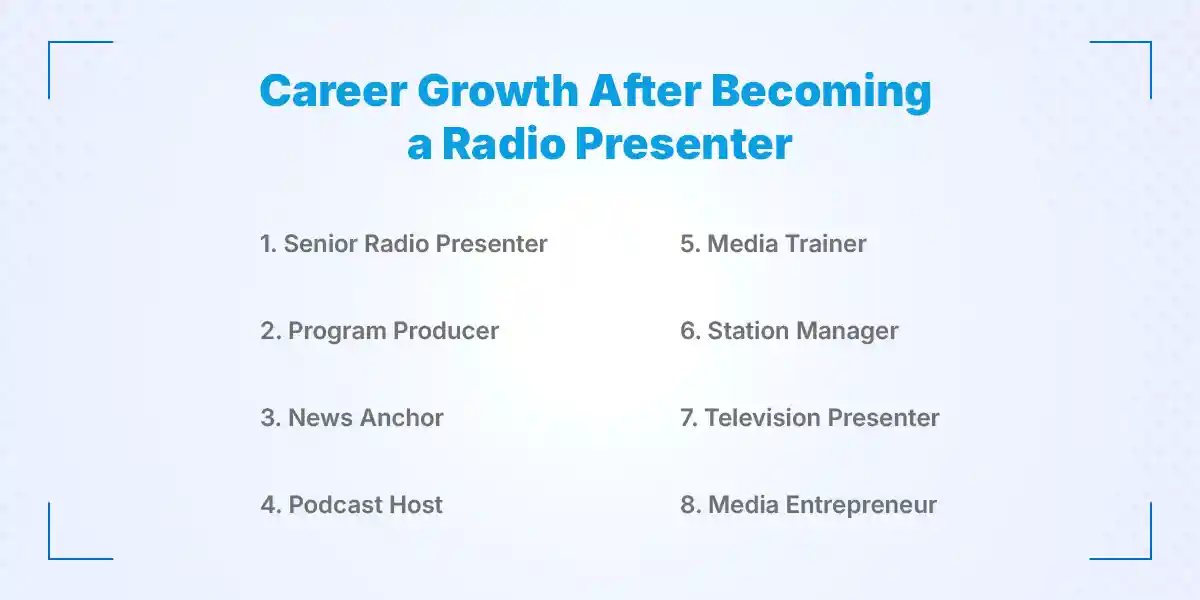
A career as a Radio Presenter offers multiple opportunities for professional growth within the media and broadcasting industry. As you gain experience, improve your presentation skills, and build a loyal audience, you can move into senior broadcasting, production, management, or digital media roles.
1. Senior Radio Presenter
After gaining several years of experience, you can advance to the role of Senior Radio Presenter. In this position, you may host prime-time programs, conduct high-profile interviews, and mentor junior presenters. Senior presenters often become the face or voice of popular radio shows with larger audiences. This role also offers greater responsibility, recognition, and earning potential.
2. Program Producer
Many experienced presenters transition into Program Producer roles after developing strong broadcasting knowledge. Program producers plan show content, coordinate production schedules, manage presenters, and ensure each program meets quality standards. They work closely with technical teams, marketing departments, and station management to deliver engaging broadcasts. This position combines creativity with leadership and organizational skills.
3. News Anchor
Radio presenters with strong journalism and reporting skills can become News Anchors. They deliver news bulletins, conduct interviews, verify information, and report on important national and international events. Accuracy, confidence, and professional communication are essential in this role. News anchors often work for both radio and television broadcasting organizations.
4. Podcast Host
The growing popularity of podcasts has created new opportunities for experienced radio presenters. Podcast hosts produce on-demand audio content covering topics such as business, entertainment, education, sports, and current affairs. They enjoy greater creative freedom while building their own audience and personal brand. Successful podcast hosts can generate income through sponsorships, advertising, and subscriptions.
5. Media Trainer
Experienced professionals can share their expertise by becoming Media Trainers. They teach communication techniques, voice presentation, interviewing skills, broadcasting ethics, and public speaking to students and aspiring presenters. Media trainers often work with colleges, training institutes, broadcasting academies, and corporate organizations. This career path allows experienced presenters to contribute to the development of future media professionals.
6. Station Manager
With leadership experience, radio presenters may advance to the position of Station Manager. Station managers oversee daily broadcasting operations, manage staff, develop programming strategies, and monitor overall station performance. They also coordinate marketing activities, budgets, and business development initiatives. This is one of the highest leadership positions within a radio station.
7. Television Presenter
Strong presentation and communication skills make it easier for radio presenters to transition into television. Television presenters host news programs, entertainment shows, interviews, and live events while developing a broader media presence. This role requires confidence in front of the camera as well as excellent communication abilities. Many successful television hosts begin their careers in radio broadcasting.
8. Media Entrepreneur
Some experienced presenters choose to establish their own media businesses after building industry experience and professional networks. They may launch podcasts, online radio stations, digital media platforms, production companies, or content creation agencies. This career path provides greater independence and opportunities to create innovative media products. Strong business management and marketing skills are important for long-term success.
What Are the Biggest Challenges Radio Presenters Face?
Radio presenting is a rewarding career, but it also comes with challenges that require continuous learning, adaptability, and professionalism. Understanding these challenges helps aspiring presenters prepare for long-term success.
- Competitive hiring: Media organizations often receive applications from many talented candidates, making strong communication skills and a professional portfolio essential.
- Irregular work schedules: Radio presenters may work early mornings, late evenings, weekends, holidays, or live event schedules depending on programming needs.
- Maintaining audience engagement: Keeping listeners interested requires creativity, confidence, updated content, and consistent interaction with the audience.
- Continuous skill improvement: Presenters must regularly improve their speaking skills, broadcasting techniques, digital media knowledge, and understanding of industry trends to remain competitive.
Why Are Radio Presentation Skills Valuable in 2026?
Radio presentation skills are valuable in 2026 because they combine communication, creativity, and digital media expertise that employers seek across multiple industries. As broadcasting continues to evolve with online platforms, podcasts, and live streaming, skilled presenters have more career opportunities than ever before. These abilities also transfer easily to television, content creation, public relations, and corporate communications.
- Growth of digital radio and podcasts: The increasing popularity of online radio stations, podcasts, and streaming platforms has created new opportunities for presenters to reach larger audiences and build successful media careers.
- Strong communication skills for multiple careers: Public speaking, storytelling, interviewing, and audience engagement are highly transferable skills that are valued in journalism, marketing, public relations, education, and corporate communications.
- Personal branding opportunities: Radio presenters can build a strong personal brand through social media, podcasts, YouTube channels, and public events, opening doors to sponsorships, collaborations, and freelance work.
- Remote broadcasting and online media growth: Advances in digital broadcasting technology allow presenters to host shows, record podcasts, and collaborate with media organizations remotely, creating opportunities to work with national and international audiences.
Conclusion
Building a successful career as a Radio Presenter in Nepal requires more than a good voice. Employers look for candidates who combine excellent communication skills, confidence, broadcasting knowledge, and practical experience with a professional resume and a strong voice portfolio. By continuously improving your presentation skills, staying informed about industry trends, and actively applying for opportunities, you can increase your chances of securing a rewarding role in the media industry.
If you're ready to begin your broadcasting career, regularly explore the latest Radio Presenter jobs in Nepal on Kumari Job. Along with verified job vacancies, you can access career resources, resume support, and opportunities that help you take the next step toward a successful career in radio and media.
Frequently Asked Questions
Submit your comments

Get Our App On



What is the Public Relations Officer Salary in Nepal
VIEW DETAILS
What Is the Salary of a Ticketing Officer in Nepal?
VIEW DETAILS
What Is the Salary of a Travel Consultant in Nepal?
VIEW DETAILS
How to Become an Auditor in Nepal
VIEW DETAILS


Loading Comments...