




Do you feel unsure about choosing a tech career that actually pays well in Nepal? Many students learn coding, design, and data tools, yet still struggle to pick a role with strong demand, fair salary, long term growth. Confusion grows when job titles overlap, salary ranges stay unclear, career paths lack visibility, and effort goes toward roles with limited future value. Wrong career moves often lead to burnout, low motivation, and repeated job switching.
In this blog, we explain which is the best IT jobs using a clear structure and practical insights. Content covers the current IT job landscape, major role categories, high paying positions, required skills, career growth paths, trusted hiring platforms, and degree relevance. By the end, readers gain clarity on selecting suitable IT jobs in Nepal based on their skills, goals, market demand, and growth potential.
In this blog
What are IT Jobs In Nepal?
IT jobs in Nepal are positions in the technology sector that involve developing, managing, and supporting software, hardware, and digital systems. These roles include software development, web and mobile app creation, network and system administration, and cybersecurity management. IT jobs also cover data analytics, business intelligence, and cloud computing. Professionals in IT help businesses automate processes, secure digital assets, and make data-driven decisions. The sector includes opportunities in startups, established tech firms, outsourcing companies, and freelance projects. Demand for skilled IT workers continues to grow as Nepal’s digital economy expands.
Best IT Jobs in Nepal
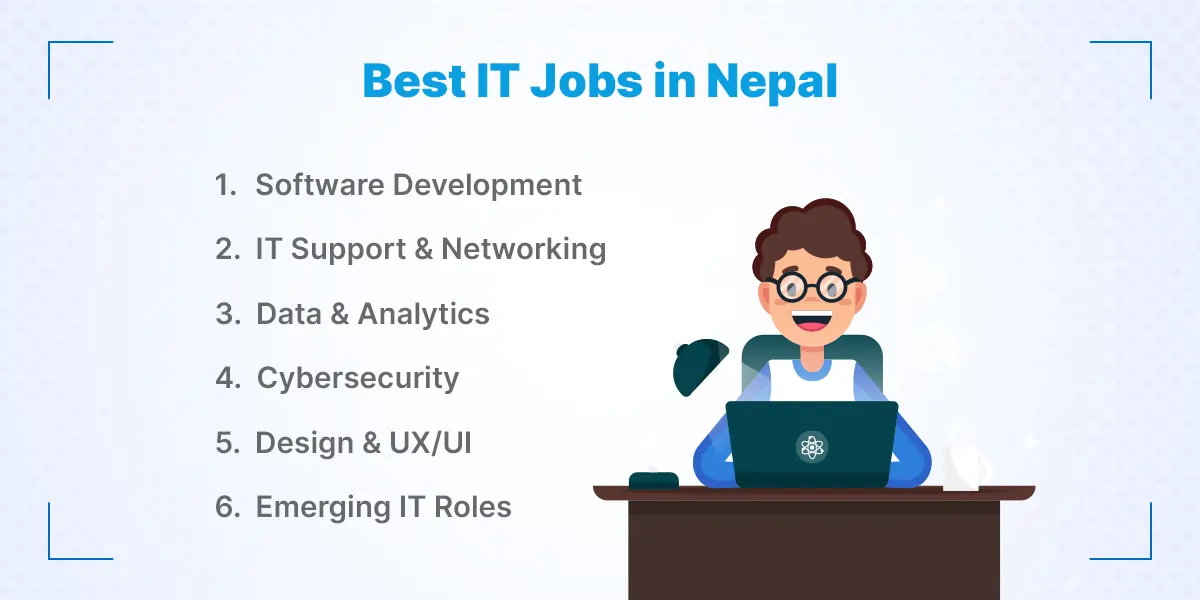
The best IT jobs in Nepal combine high demand, competitive salaries, and strong career growth. Roles in software development, IT support, data analytics, cybersecurity, and design offer opportunities across startups, established firms, and outsourcing companies. Emerging technologies such as cloud computing, AI, and DevOps are creating new high-value positions. Choosing the right IT job depends on your skills, interests, and long-term career goals. Professionals who update skills regularly and focus on in-demand technologies can learn how to get IT jobs and enjoy faster career growth with better earning potential.
1: Software Development
Software development remains the most sought-after IT field in Nepal due to its versatility and high demand. Developers build web applications, mobile apps, desktop software, and enterprise solutions. Key roles include frontend developers who focus on user interfaces, backend developers who manage server-side logic, and full-stack developers who handle both areas. Proficiency in programming languages like Python, Java, JavaScript, C#, and frameworks such as React, Angular, or Django is essential. Additional skills in version control, APIs, and cloud integration boost employability. Career paths often progress from junior developer to senior developer, team lead, and eventually software architect or project manager. Nepalese IT companies also offer software development jobs in Nepal through freelance and remote positions for skilled developers.
2: IT Support & Networking
IT support and networking roles ensure that company systems, servers, and networks operate efficiently and securely. Key positions include system administrators, network engineers, IT technicians, and help desk specialists. Responsibilities involve installing and maintaining hardware, configuring networks, troubleshooting issues, and managing cloud infrastructure. Knowledge of Windows and Linux servers, routers, firewalls, VPNs, and network monitoring tools is highly valued. These roles provide stable career growth and can evolve into senior network engineer, IT manager, or infrastructure lead positions. Companies across Nepal, from startups to large corporations, depend on skilled support staff to maintain operations, making these roles consistently in demand.
3: Data & Analytics
Data and analytics jobs focus on gathering, interpreting, and presenting information to support business decisions. Positions include data analyst jobs in Nepal, data scientists, and business intelligence (BI) specialists. Professionals work with SQL, Python, R, Excel, and visualization tools like Tableau, Power BI, or Looker to process and analyze datasets. Responsibilities include creating reports, identifying trends, building predictive models, and advising management on strategy. Career progression can lead to senior analyst, data strategist, analytics manager, or chief data officer roles. With Nepalese businesses increasingly adopting data-driven decision-making, demand for skilled data professionals continues to grow.
4: Cybersecurity
Cybersecurity jobs protect companies from data breaches, malware, ransomware, and other cyber threats. Key roles include ethical hackers, security analysts, security engineers, and chief information security officers (CISOs). Responsibilities include monitoring networks, conducting penetration tests, assessing vulnerabilities, implementing security policies, and responding to incidents. Skills in firewall configuration, intrusion detection, risk assessment, encryption, and security tools are critical. Career growth often advances from junior analyst to senior security engineer, security consultant, or CISO. With increasing digitalization and outsourcing in Nepal, professionals looking for a career in cybersecurity are highly valued and well-compensated.
5: Design & UX/UI
Design and UX/UI roles focus on creating intuitive, user-friendly, and visually appealing digital products. Positions include graphic designers, UX designers, UI designers, and product designers. Responsibilities cover wireframing, prototyping, user research, interface design, and branding. Mastery of tools like Figma, Sketch, Adobe Creative Suite, and principles of user experience is essential. Designers can progress to senior designer, lead UX/UI designer, or design manager roles. With more companies investing in digital products and apps, skilled designers are increasingly in demand in Nepal.
6: Emerging IT Roles
Emerging IT roles focus on technologies reshaping the industry, including cloud computing, DevOps, artificial intelligence (AI), machine learning (ML), and automation. Positions include cloud engineers, DevOps specialists, AI/ML engineers, and automation developers. Professionals manage cloud infrastructure, CI/CD pipelines, AI algorithms, and automation workflows. Advanced skills, certifications, and problem-solving ability are essential for success. Career growth is rapid, and these roles often offer the highest salaries among IT positions in Nepal. Companies leveraging modern tech, especially outsourcing firms and startups, actively seek these specialists.
Skills Required for IT Jobs in Nepal
IT jobs in Nepal demand a combination of IT skills, interpersonal abilities, and knowledge of emerging technologies. Employers look for candidates who can handle software, hardware, networks, or data efficiently while communicating effectively and solving problems. Continuous learning and adapting to new tools or methods are essential. Having the right skills increases employability, career growth, and earning potential.
Technical Skills
Technical skills include hands-on knowledge and expertise required to perform IT tasks effectively. These skills vary depending on the job role but are essential for software development, data analysis, network management, and cybersecurity.
Key Technical Skills:
- Programming languages: Python, Java, JavaScript, C#
- Database management: SQL, MySQL, MongoDB
- Web and app development frameworks: React, Angular, Django, Flutter
- Network configuration, server management, cloud platforms
- Tools for data analysis: Excel, Tableau, Power BI, R
- Cybersecurity tools and protocols: firewalls, encryption, penetration testing
Soft Skills
Soft skills refer to interpersonal and cognitive abilities that help professionals work efficiently and collaborate with teams. They are crucial for problem-solving, decision-making, and career progression.
Key Soft Skills:
- Communication: explaining technical ideas clearly
- Teamwork and collaboration in projects
- Problem-solving and critical thinking
- Time management and prioritization
- Adaptability to changing technologies and tasks
Emerging Skills
Emerging skills focus on modern technologies that are shaping the IT sector. Professionals with these abilities have an edge in high-paying and innovative roles.
Key Emerging Skills:
- Cloud computing platforms: AWS, Azure, Google Cloud
- DevOps practices and CI/CD pipelines
- Artificial Intelligence and Machine Learning algorithms
- Automation tools and robotics process automation (RPA)
- Data science techniques and big data handling
Where to Find IT Jobs in Nepal?
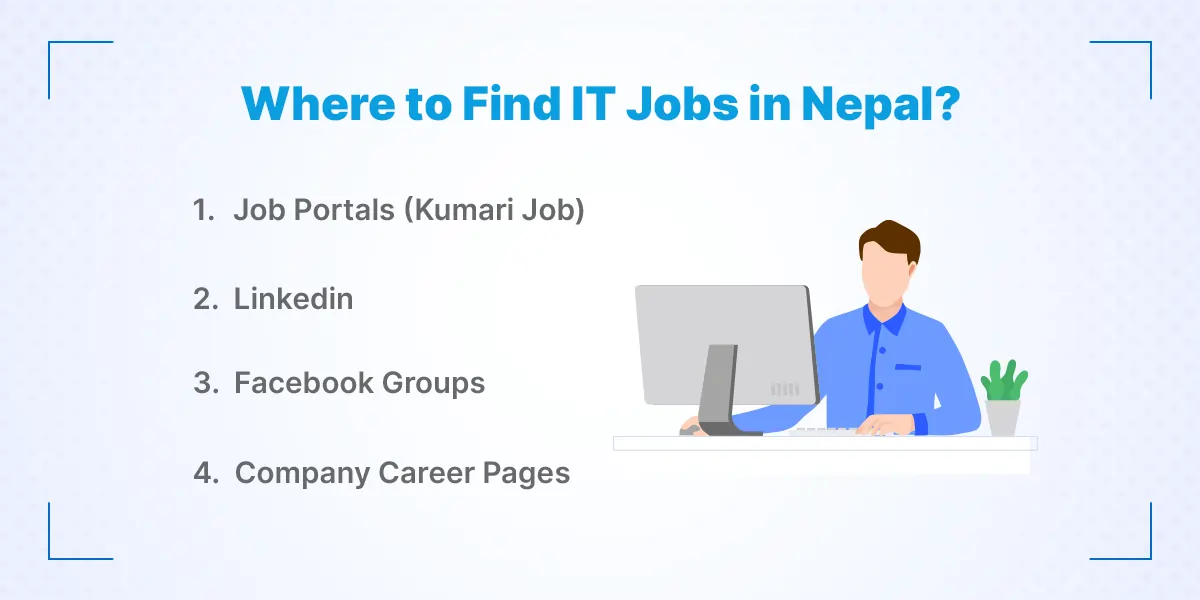
You can find IT jobs in Nepal on job portals like Kumari Job, LinkedIn, Facebook groups, and company career pages. These platforms list opportunities across software development, IT support, data analytics, cybersecurity, and design roles. Using multiple sources increases the chances of discovering suitable positions. Job seekers can filter roles by experience, location, salary, or type of employment. Staying active on these platforms ensures access to the latest openings and networking opportunities.
1. Job Portals
Kumari Job is one of the most popular online job portals in Nepal and serves as a centralized platform for IT professionals seeking employment. It offers listings for a wide range of IT roles, including software developers, network engineers, data analysts, cybersecurity specialists, and UX/UI designers. Each listing provides a detailed description of the position, required qualifications, and application procedures. The portal also allows users to filter jobs by location, experience level, and company, making it easier to find positions that match individual skills and goals. Additionally, job seekers can submit resumes directly through the portal and receive notifications for new openings, ensuring they never miss opportunities.
2. LinkedIn
LinkedIn is a professional networking platform widely used by IT companies and recruiters in Nepal. Beyond simply listing jobs, it allows candidates to showcase their skills, experience, and projects to potential employers. Users can apply for positions directly through company posts and follow organizations to get updates on new openings. LinkedIn also facilitates networking, making it possible to connect with hiring managers, industry professionals, and peers who can provide referrals or guidance. Engaging with professional groups and industry discussions further enhances visibility and helps job seekers stay informed about trends, certifications, and career advice relevant to IT roles.
3. Facebook Groups
Facebook groups dedicated to IT jobs provide community-driven opportunities for job seekers. Many companies and recruiters post vacancies directly within these groups, often including freelance or contract roles that may not appear on formal portals. These groups allow members to share insights, advice, and referrals, creating a collaborative environment for finding positions. Candidates can ask questions, discuss industry trends, and receive feedback on applications or interview experiences. Active participation in these groups helps IT professionals discover openings quickly and connect with others in similar career paths, increasing chances of securing relevant positions.
4. Company Career Pages
Many IT companies in Nepal maintain dedicated career pages on their official websites, providing accurate and up-to-date job postings. These pages often list full-time, part-time, and internship opportunities and provide detailed descriptions of job responsibilities, qualifications, and the application process. Applying directly through a company’s career page allows candidates to bypass third-party recruiters and submit applications straight to the hiring team. Subscribing to company newsletters or alerts ensures candidates receive timely updates on new openings. Additionally, career pages offer insight into company culture, growth opportunities, and employee benefits, helping applicants make informed decisions before applying.
Do You Need a Professional Degree for IT Jobs in Nepal?
No, a professional degree is not always required for IT jobs in Nepal. Many positions, especially in software development, data analysis, and design, value practical skills, certifications, and project experience over formal education. However, some roles in networking, cybersecurity, and enterprise IT may prefer candidates with a degree in computer science, IT, or related fields. Certifications like AWS, Cisco, or Microsoft can often substitute for a formal degree and enhance employability. Self-taught professionals who build strong portfolios and demonstrate hands-on skills can secure high-paying IT jobs. Ultimately, practical knowledge and demonstrable expertise often matter more than a formal degree in Nepal’s IT sector.
Career Growth in IT Jobs
Career growth in IT jobs in Nepal is strong for professionals who continuously upgrade their skills and adapt to new technologies. The sector offers clear pathways from entry-level roles to senior positions, with opportunities for specialization and leadership. Professionals can advance based on performance, certifications, and hands-on experience. Emerging technologies like cloud computing, AI, and cybersecurity are creating faster growth opportunities and opening doors to some of the highest-paid jobs in Nepal. Understanding career paths helps job seekers plan skill development and maximize earning potential.
1. Career Progression from Entry-Level to Senior Roles
IT professionals typically start in entry-level positions such as junior software developer, IT support technician, or data analyst. In these roles, they gain hands-on experience, learn industry tools, and understand workplace processes. With consistent performance and skill development, individuals can move to mid-level positions like software engineer, network administrator, or business intelligence analyst. Senior roles include team lead, project manager, senior developer, or IT manager, where professionals handle complex projects, lead teams, and make strategic decisions. Progression depends on technical expertise, project experience, and the ability to adapt to evolving technologies.
2. Opportunities for Specialization and Leadership
IT jobs in Nepal offer ample opportunities for professionals to specialize in areas such as cloud computing, cybersecurity, AI/ML, DevOps, or UX/UI design. Specialization enhances career prospects, making candidates eligible for niche roles with higher salaries and greater responsibility. Leadership roles emerge as professionals gain experience, including positions like team lead, project manager, or department head. These roles involve managing teams, overseeing projects, and contributing to company strategy. Mentorship, certifications, and successful project delivery are key factors in advancing into specialized or leadership positions.
3. Typical Timelines and Growth Paths in the Nepalese IT Industry
Career timelines in Nepal’s IT sector vary depending on skills, certifications, and company size. Entry-level positions typically last 1–3 years, during which professionals build foundational knowledge and practical experience. Mid-level roles often require 3–5 years of experience, focusing on specialization and project ownership. Senior and leadership roles may take 5–10 years, depending on performance, expertise, and networking. Continuous learning and adapting to emerging technologies accelerate growth, while consistent skill demonstration can shorten timelines for promotion. Growth paths are flexible, allowing transitions between development, analytics, support, or managerial tracks based on interest and market demand.
Conclusion
The IT sector in Nepal provides a range of opportunities in software development, IT support, data analytics, cybersecurity, design, and emerging technologies. High demand, competitive salaries, and clear career paths make it an attractive choice for professionals. Choosing the right role depends on skills, interests, and market trends, while entry-level positions help build experience for mid-level and senior roles. Job seekers can explore openings through portals like Kumari Job, LinkedIn, Facebook groups, and company career pages, and practical skills or certifications often matter more than formal degrees.
Focusing on relevant technical, soft, and emerging skills ensures long-term career growth. Specialization in areas like cloud computing, AI, DevOps, or cybersecurity increases earning potential and opens leadership opportunities. Continuous learning and networking help professionals stay competitive, adapt to industry changes, and achieve success in Nepal’s evolving IT landscape.
Frequently Asked Questions
Submit your comments

Get Our App On



What is the Public Relations Officer Salary in Nepal
VIEW DETAILS
What Is the Salary of a Ticketing Officer in Nepal?
VIEW DETAILS
What Is the Salary of a Travel Consultant in Nepal?
VIEW DETAILS
How to Become an Auditor in Nepal
VIEW DETAILS


Loading Comments...