




Biotechnology is a science-driven field that combines biology, technology, and research to solve practical problems. Biotechnology jobs in Nepal are rising due to increasing demand in hospitals, pharmaceutical companies, diagnostic labs, food industries, and environmental projects. As these sectors expand, so does the need for skilled biotech professionals.
However, many students and job seekers still wonder what biotech roles are available. What qualifications are needed? And is there real career growth for biotechnology in Nepal? This guide answers those questions clearly. Here, we’ve discussed the opportunities, skills, salaries, and career paths to help you understand how to build a successful biotechnology career in Nepal.
In this blog
What are Biotechnology Jobs?
Biotechnology jobs are roles where people use biology and technology to study living organisms and create solutions for healthcare, agriculture, the environment, and industry. These jobs often include lab experiments, research, and applying scientific knowledge to solve real problems.
In Nepal, such jobs are available in hospitals, pharmaceutical companies, diagnostic labs, food industries, and research centers. As the country focuses more on science-based solutions, the need for trained biotechnology professionals is growing. This makes biotechnology a smart and future-ready career choice.
Who Should Consider a Career in Biotechnology?
A career in biotechnology is good for people who like science, research, and solving problems. It suits students who studied biology, chemistry, or health sciences. People who pay attention to detail and enjoy working in labs will thrive in this field. Biotechnology also fits those who want work that helps health, food, and new ideas. With the right skills, it offers steady work and growth.
Looking for Biotechnology Jobs in Nepal?
Explore verified biotech openings, apply to top employers, and take the next step toward a successful biotech career today.
What are the Top Biotechnology Job Roles in Nepal?
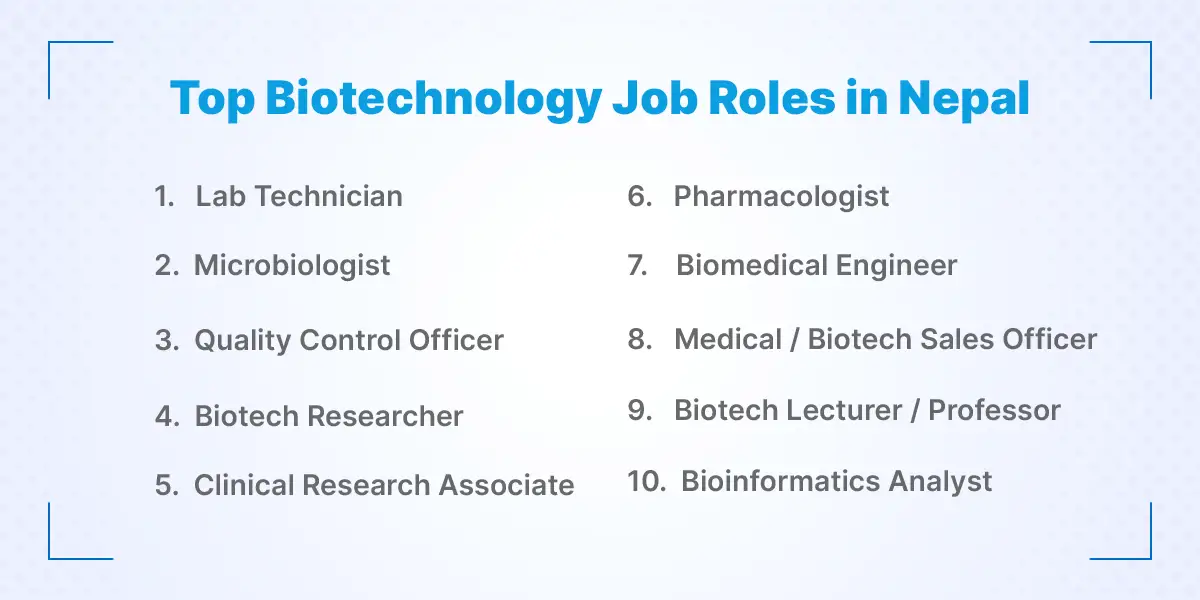
The common biotechnology job roles in Nepal include Lab Technicians, Microbiologists, Biotech Researchers, Clinical Researchers, Pharmacologists, and Biomedical Engineers. Biotechnology graduates can contribute to a wide range of responsibilities, from lab work and research to teaching, sales, and data analysis. The demand for these positions is growing steadily, and salaries vary depending on experience, sector, and location. Let’s explore each role in detail to understand its responsibilities, scope, and opportunities in Nepal.
1. Lab Technician
A Lab Technician works directly in laboratories, performing experiments, preparing samples, and maintaining equipment. They support research and diagnostics by ensuring tests are accurate and results are reliable. In hospitals, pharmaceutical labs, or research centers, their work is crucial for everyday operations. Lab Technicians in Nepal earn a moderate starting salary, but experience and certifications can boost pay. This role is in demand as labs in healthcare, agriculture, and research sectors expand.
2. Microbiologist
Microbiologists study microorganisms such as bacteria, viruses, and fungi to understand their impact on health, food, and the environment. They conduct research, analyze samples, and help develop vaccines, antibiotics, or bio-based products. Microbiologists in Nepal are needed in hospitals, labs, research institutes, and food industries. The work requires precision and patience, but it offers a rewarding career for those interested in research and innovation. With growing awareness of health and hygiene, microbiology roles have a strong demand and a promising career path.
3. Quality Control Officer
A Quality Control (QC) Officer ensures that products, especially in pharmaceuticals, food, and biotech industries, meet safety and quality standards. They monitor processes, perform testing, and document results to maintain compliance with regulations. QC Officers are vital in protecting public health and building trust in products. Salaries vary based on the sector, with pharma companies offering higher pay. This role combines technical skills with responsibility, and experienced QC professionals are always in demand.
4. Biotech Researcher
Biotech Researchers design and conduct experiments to develop new products, medicines, or biosolutions. They work in labs or research institutes, analyzing data, testing hypotheses, and publishing findings. In Nepal, opportunities exist in healthcare, agriculture, environmental projects, and universities. It is a challenging but highly respected role that can lead to innovation and breakthroughs. Research positions often come with the possibility of higher pay and career growth with experience and further studies.
5. Clinical Research Associate
A Clinical Research Associate (CRA) manages and monitors clinical trials for new drugs, vaccines, or medical devices. They ensure that trials are conducted safely, ethically, and according to protocols. In Nepal, CRAs work with hospitals, pharmaceutical companies, and research organizations. The role combines scientific knowledge with project management skills. CRAs are increasingly needed as the country participates in more clinical studies, offering good pay and professional growth.
5. Pharmacologist
Pharmacologists study how drugs interact with the body and help develop safer and more effective medications. They may work in drug research, clinical trials, or educational institutions. Pharmacologists in Nepal often find roles in pharma companies, hospitals, and universities. Their work directly contributes to patient health and medical advancement. Experienced pharmacologists can earn competitive salaries, and the role carries high respect in the medical and scientific community.
6. Biomedical Engineer
A Biomedical Engineer designs and maintains medical devices, lab equipment, or biotech instruments. They combine engineering and biology to create solutions that improve healthcare and research. In Nepal, biomedical engineers work in hospitals, labs, and medical device companies. Their role is critical for modern diagnostics, patient care, and lab efficiency. With technology advancing in healthcare, this is a growing and well-paid career path.
7. Medical / Biotech Sales Officer
A Medical or Biotech Sales Officer promotes and sells biotech products, medical devices, or pharmaceuticals to hospitals, labs, and clinics. They need knowledge of products, client management skills, and the ability to explain complex science simply. In Nepal, sales roles are often rewarding because they combine science with business, and top performers can earn incentives and bonuses. It is a dynamic job for those who enjoy communication and fieldwork alongside scientific knowledge.
8. Biotech Lecturer / Professor
Biotech Lecturers or Professors teach biotechnology courses at colleges or universities, while sometimes conducting research. They shape the next generation of biotech professionals and may guide student projects or laboratory work. In Nepal, academic roles are prestigious and provide stability, with opportunities for growth in research and publications. This role suits people who enjoy teaching, mentoring, and contributing to scientific knowledge.
9. Bioinformatics Analyst
A Bioinformatics Analyst uses computer tools to study biological data, such as DNA sequences, proteins, or gene expression. They work at the intersection of biology, IT, and data analysis, helping research institutes, hospitals, and biotech companies make sense of complex data. In Nepal, bioinformatics is an emerging field with growing demand, especially in research and healthcare analytics. Analysts with strong skills in programming, data management, and biology can expect high growth potential and good career prospects.
Major Sectors Offering Biotechnology Jobs in Nepal
The main sectors offering biotechnology jobs in Nepal are healthcare and pharmaceutical, agricultural and food, environmental and industrial, academic and research, and diagnostic labs. Each sector uses biotechnology in its own way, from improving health and medicines to boosting crops and protecting the environment. As these sectors grow, they create more job opportunities for skilled professionals in Nepal. Let’s look at each sector to understand the jobs and opportunities it provides.
1. Healthcare and Pharmaceutical Biotechnology
Healthcare and pharmaceutical biotechnology work to improve medicines, vaccines, diagnostics, and patient care. People in this sector work in hospitals, labs, and pharmaceutical companies to develop and test medical products. Jobs range from lab technicians to clinical researchers. Salaries are often higher here because the work requires special knowledge. With healthcare growing in Nepal, this sector is becoming one of the fastest-growing areas for biotechnology jobs.
2. Agricultural and Food Biotechnology
Agricultural and food biotechnology helps make crops better, increase harvests, and keep food safe. Professionals work on improving genes, pest resistance, soil health, and nutrition in crops. In Nepal, these roles are important for sustainable farming and food security. This sector offers jobs in research centers and agribusiness companies, making it a good choice for those who want to apply science to farming.
3. Environmental and Industrial Biotechnology
Environmental and industrial biotechnology uses living organisms to solve environmental problems and improve industry. Jobs here include waste management, making biofuels, and testing the environment. Professionals help reduce pollution, recycle materials, and make eco-friendly solutions. This sector is growing in Nepal as industries and government programs focus more on sustainability.
4. Academic and Research-Based Biotechnology Jobs
Academic and research biotechnology jobs involve teaching, guiding students, and doing experiments at universities or research centers. Professionals design experiments, support student projects, and publish research. In Nepal, these roles are respected and help improve scientific knowledge while training future biotech experts. This sector also gives chances to work with international research projects.
5. Diagnostic Labs and Clinical Testing Roles
Diagnostic labs and clinical testing are important for healthcare, helping detect diseases and check treatments. Biotech professionals here perform tests, analyze samples, and ensure results are correct. Hospitals, private labs, and research centers hire most of these professionals in Nepal. As accurate and fast testing becomes more important, jobs in this sector are growing and highly valued.
How to Apply for Biotechnology Jobs in Nepal?
To get a biotechnology job in Nepal, you need to find suitable openings, understand the job role and sector, create a strong CV and cover letter, gain practical experience, and prepare for interviews. These steps help you stand out and increase your chances of getting hired. Let’s break down each step in detail.

1. Find Biotechnology Jobs in Nepal
The first step is to look for biotechnology job openings in Nepal. You can check online job portals like Kumari Job and LinkedIn, company websites hiring related roles, and professional networks. Also, attending career fairs and following industry updates can help you discover hidden opportunities. Staying updated ensures you don’t miss out on positions that match your skills and interests.
2. Understand the Job Role and Sector
Before applying, make sure you fully understand the job responsibilities and the sector it belongs to, such as healthcare, agriculture, or research. Read job descriptions carefully and research the company’s work. Knowing the expectations helps you curate your application and prepare better for interviews. It also ensures you choose roles that align with your skills and career goals.
3. Create a Biotechnology-Focused CV
A CV for biotechnology jobs should highlight your education, lab skills, research experience, and any certifications. Use clear headings and bullet points to make it easy for recruiters to read. Include any internships, projects, or volunteer work that show practical experience. A focused CV helps recruiters quickly see your suitability for the role.
4. Writing a Relevant Cover Letter
A strong cover letter explains why you are interested in the job and how your skills match the role. Keep it concise, specific, and professional, highlighting key achievements. Mention any experience with lab work, research, or biotech tools that relate to the position. A well-written cover letter complements your CV and increases your chances of getting an interview.
5. Gain Lab Experience, Internships, or Training
Practical experience is crucial in biotechnology. Internships, lab training, or project work show that you can handle real lab tasks. Even short-term experience helps you understand procedures, safety protocols, and industry standards. Employers in Nepal value candidates who can apply knowledge in practical situations.
6. Prepare for Technical Interviews
Technical interviews in biotechnology often test your knowledge of lab techniques, research methods, and problem-solving skills. Review your coursework, practical experiences, and common lab procedures. Practicing answers to common interview questions can boost confidence. Being well-prepared demonstrates your readiness and professionalism to potential employers.
7. Follow Up and Build Industry Connections
After applying or attending interviews, follow up politely to show interest. Networking with professionals, professors, and colleagues can open doors to new opportunities. Join biotech groups, attend seminars, and connect on professional platforms. Building connections helps you stay informed and increases your chances of landing the right biotechnology job in Nepal.
Qualifications and Skills Required for Biotechnology Jobs
To get a biotechnology job in Nepal, the major requirements include relevant education, technical lab skills, soft skills, and knowledge of tools and techniques used in labs. These qualifications ensure you can handle practical work, research, and collaboration effectively. Understanding what employers look for helps you prepare better and stand out in the competitive biotech job market. Let’s explore each requirement in detail:
1. Educational Requirements
Most biotechnology jobs in Nepal require at least a diploma or bachelor’s degree in biotechnology, microbiology, or related fields. A master’s degree can open doors to research, higher-level lab, or academic positions. Some specialized roles may also require certifications in clinical research or bioinformatics. Choosing the right educational path ensures you have the foundation to handle lab work, research projects, and technical responsibilities.
2. Core Technical and Laboratory Skills
Technical and lab skills are essential in biotechnology jobs. You should know how to conduct experiments, handle samples, and follow safety protocols carefully. Skills like cell culture, DNA/RNA analysis, and microbiological testing are highly valued. Employers in Nepal look for candidates who can apply these skills accurately and consistently in real lab settings.
3. Soft Skills Needed in Biotechnology Careers
Soft skills are just as important as technical knowledge in biotechnology. Communication skills help you report results clearly and work with teams. Problem-solving and attention to detail are crucial when experiments don’t go as planned. Time management and adaptability also ensure you can handle multiple tasks efficiently, which is important in labs and research projects.
4. Tools, Techniques, and Lab Equipment Knowledge
Biotech professionals must know how to use lab tools and equipment properly. This includes pipettes, microscopes, centrifuges, and PCR machines. Understanding modern techniques like genetic analysis, chromatography, and bioinformatics software is also important. Familiarity with tools and techniques makes you productive from day one and increases your value to employers in Nepal.
Salary Range and Career Growth in Biotechnology Jobs
Biotechnology jobs in Nepal offer good salary potential and clear career growth depending on your role, experience, and sector. Entry-level positions may start with modest pay, but as you gain experience and specialize, salaries and responsibilities increase. Understanding salary trends and growth paths helps you plan your career and make smart decisions. Let’s break down the details.
1. Average Salary for Biotechnology Jobs in Nepal
The average salary for biotechnology jobs in Nepal ranges from NRs 20,000–50,000 per month for fresh graduates and entry-level roles. Mid-level professionals with experience can earn NRs 50,000–80,000 per month, depending on the sector. Senior researchers, professors, or specialists, especially in healthcare or pharma, can earn over NRs 1 lakh per month. Overall, salaries grow as you gain experience, take on responsibilities, and specialize in high-demand areas.
2. Factors That Affect Biotechnology Salaries
Several factors affect salaries in biotechnology. Education and qualifications matter. Higher degrees often lead to better pay. Experience and specialization also play a role, as skilled researchers or lab managers are in high demand. The sector makes a difference, too. Healthcare, pharma, and research institutes generally pay more than agriculture or environmental biotech. Location, company size, and reputation can further influence pay.
3. Career Growth and Promotion Path
Biotechnology careers in Nepal offer clear growth paths. You can start as a lab technician or research assistant and move up to senior researcher, lab manager, or academic roles. Promotions often come with more responsibility, such as leading projects, managing teams, or supervising labs. Continuously improving your skills, learning new techniques, and gaining certifications boosts your chances of promotion.
4. Opportunities for Higher Studies and International Careers
Higher studies open doors to research, teaching, or specialized biotech roles. Master's or PhD programs allow you to focus on areas like genetic engineering, bioinformatics, or clinical research. International opportunities also exist in research, pharma, and environmental biotech. These paths increase career growth, earning potential, and global exposure while expanding your professional network.
Building a Successful Biotechnology Career in Nepal: Tips & Opportunities
Building a successful biotechnology career in Nepal requires understanding challenges, gaining experience, choosing the right specialization, and continuously improving skills. The field is growing, but limited awareness, competition, and the need for practical experience can make it challenging for new professionals. Knowing these challenges and opportunities helps you plan your career better and take practical steps to succeed. Let’s explore the key tips and opportunities in detail.
1. Understanding the Current Challenges
One of the main challenges in biotechnology in Nepal is the limited availability of advanced labs and research facilities. Many companies and institutions are still developing their infrastructure, which can affect hands-on learning. Competition for specialized roles is increasing as more students graduate in related fields. When you understand these challenges early, you can prepare strategically and focus on gaining the skills and experience that employers value most.
2. Growing Opportunities in Healthcare, Pharma, and Agriculture
Despite challenges, healthcare, pharmaceuticals, and agriculture offer growing opportunities for biotechnology professionals. Hospitals, pharma companies, and agribusinesses are expanding and need skilled staff for research, quality control, and production. New initiatives in vaccines, diagnostics, and sustainable farming are also creating specialized roles. Staying updated on industry trends can help you identify the best areas to focus on.
3. Gaining Hands-On Lab Experience
Hands-on lab experience is essential for a successful biotech career. Internships, training programs, and research projects allow you to practice techniques, use lab equipment, and follow safety standards. Even short-term experience helps you understand real-world procedures and boosts your confidence. Employers in Nepal value candidates who can apply knowledge practically, making this experience crucial.
4. Upskilling Through Certifications and Technical Training
Certifications and technical training boost your expertise and employability. Short-term courses in lab techniques, molecular biology, or clinical research add value to your CV. Online courses, workshops, and in-house training programs help you stay updated with modern methods. Continuous learning shows employers that you are proactive and ready to handle advanced biotech work.
5. Networking with Professionals and Institutions
Networking is key to discovering opportunities and growing your career. Attend seminars, workshops, and conferences to meet professionals and experts. Connect with alumni, professors, and industry insiders to gain guidance and referrals. Building strong professional relationships can open doors to jobs, internships, and collaborative projects in Nepal and abroad.
What is the Scope of Biotechnology in Nepal?
The scope of biotechnology in Nepal is growing rapidly in healthcare, agriculture, research, and industry, offering many opportunities for skilled professionals. As hospitals, pharma companies, and research institutes expand, biotech careers are becoming more important. Biotechnology is helping improve health, food security, and scientific innovation across the country. Let’s look at the main areas where biotechnology is making an impact.
1. Growth in Pharma, Diagnostics, and Healthcare
Biotechnology is driving growth in pharmaceuticals, diagnostics, and healthcare in Nepal. Hospitals and labs are using modern techniques to develop vaccines, medicines, and diagnostic tests. Pharma companies are expanding, creating jobs in research, quality control, and production. With rising health needs and awareness, this sector offers strong career opportunities for biotech professionals.
2. Biotechnology in Agriculture and Food Security
In agriculture, biotechnology helps improve crops, increase yield, and ensure food safety. Professionals work on developing pest-resistant plants, improving soil health, and enhancing nutrition. These innovations support sustainable farming and help Nepal meet food security goals. Agriculture-related jobs are growing, offering opportunities in research, agribusiness, and government projects.
3. Research, Innovation, and Global Collaboration
Research and innovation are important parts of biotechnology in Nepal. Professionals are working on new solutions for health, agriculture, and the environment. Collaborations with universities and research institutes around the world are also increasing. This creates chances for learning, higher studies, and working on global projects, making biotechnology a promising field for long-term career growth.
Conclusion
Biotechnology is a promising and future-ready career in Nepal for anyone who is curious, driven, and passionate about science. It offers opportunities to make a real difference. As a biotech professional, you contribute to improving healthcare, enhancing food security, protecting the environment, and driving innovation.
While the field is competitive and Nepal has limited lab facilities, these can be overcome with the right skills, hands-on experience, and persistence. Every experiment you run, every skill you master, and every connection you build brings you closer to a meaningful and impactful career.
If you are ready to take the first step, explore opportunities, gain practical experience, and continuously upskill, biotechnology can be more than just a job. It can be a career that shapes the future of Nepal. Your curiosity, dedication, and willingness to learn are your greatest tools. Start today, and position yourself at the forefront of innovation and discovery in this exciting and growing field.
Frequently Asked Questions
Submit your comments

Get Our App On



What is the Public Relations Officer Salary in Nepal
VIEW DETAILS
What Is the Salary of a Ticketing Officer in Nepal?
VIEW DETAILS
What Is the Salary of a Travel Consultant in Nepal?
VIEW DETAILS
How to Become an Auditor in Nepal
VIEW DETAILS


Loading Comments...